About Howell Water Damage Restoration
Water damage restoration for the Livingston County seat and the townships around it, built around basements, sump pits, Michigan winters and the IICRC S500 drying standard.
Water damage restoration for basements, old downtown homes and newer subdivisions
The city was platted in the 1830s and became the seat of Livingston County soon after. Brick storefronts fill five blocks of Grand River Avenue, and the streets behind them hold Queen Anne and Italianate houses from the late 1800s. Around the city, Genoa, Oceola and Marion townships filled with colonials and ranch homes from the 1990s on.
Most homes here have a basement, and that shapes the typical water loss. Water comes up through a floor drain, in at a window well, out of a sump pit, or down from a pipe that froze in an outside wall. The restoration crew plans each dry-out around the house: the tech who does the walkthrough asks where the water came from and when it started, maps the moisture, and then decides what dries in place and what comes out.
Winter sets the rest. Weeks below freezing split pipes in garages and crawl spaces, ice dams push meltwater into attics, and the spring thaw keeps sump pumps running hard.
Every dry-out is documented the same way: a moisture map on the first visit, daily readings with temperature and humidity, and timestamped photos before anything is removed. That record shows when the structure reached the drying goal and gives an adjuster what a water claim is judged on.
Find us on Google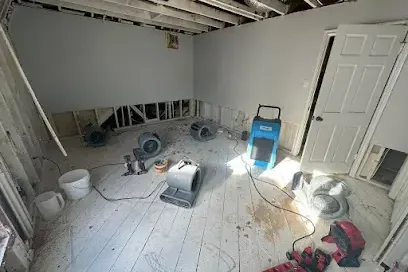
The standard every local dry-out is held to
IICRC S500 is the industry drying standard. It is measured with meters and logs, not judged by eye.
How a water loss in Livingston County is handled
Readings before equipment
The tech who does the walkthrough checks walls, floors and the basement slab with pinless meters and thermal imaging before a single fan is placed.
Dried to IICRC S500
The drying team follows IICRC S500, the industry drying standard, so framing and subfloor get structural drying, not a surface wipe.
A file the adjuster can follow
Moisture maps, daily logs and timestamped photos go into one claim file from the first visit to the last reading.
Built for Michigan winters
Frozen pipes, ice dams, snowmelt seepage and sump pumps that quit in a storm are routine work across Livingston County.
Water damage at home right now?
The drying team works across downtown, the Thompson Lake side, Genoa, Oceola and Marion townships and the lake communities nearby.