Sewage and Septic Backup Cleanup in Howell, MI
Sewage that comes up through a basement floor drain, a toilet or a shower is Category 3 from the moment it appears. The mitigation team works in protective gear behind containment, removes what it touched and treats and dries the structure.
(888) 612-9219Sewage on the basement floor? Call now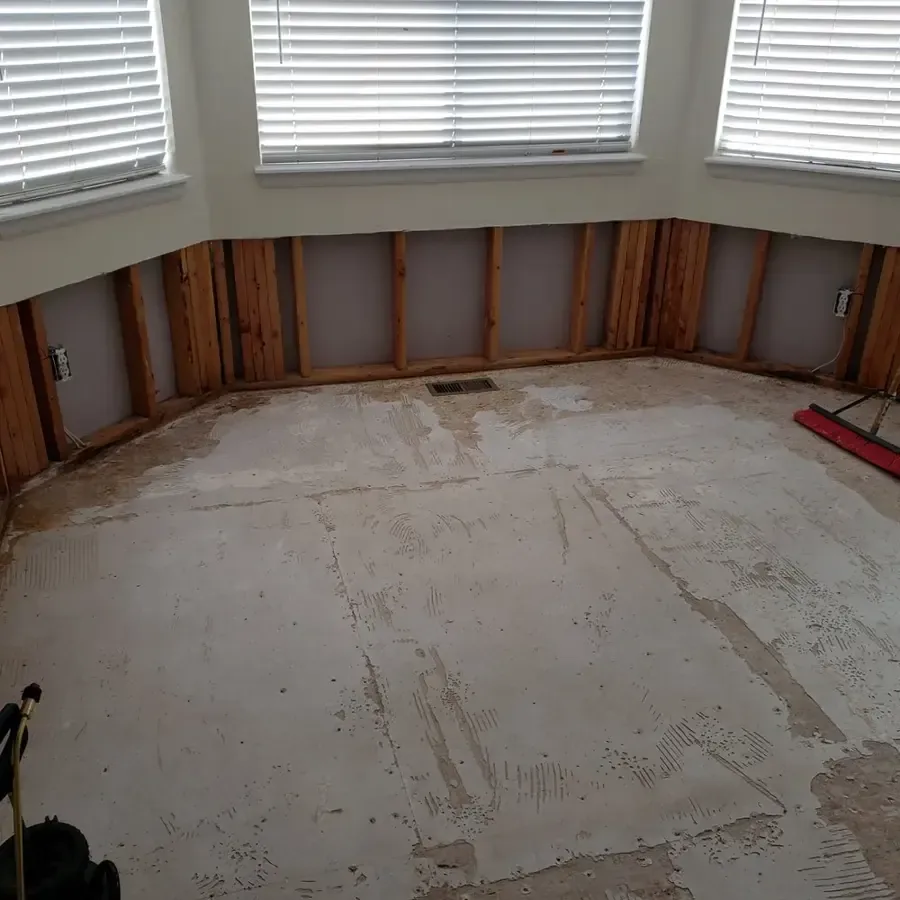
First steps for sewage and septic backup cleanup in Howell
Keep everyone out
Children and pets stay away from the area.
Stop using water
No flushing, laundry or showers until the cause is cleared.
Shut off power if wet
From a dry panel only.
Leave the cleanup alone
Sewage needs protective gear; photograph it and call.
How a sewage and septic backup cleanup job is handled
Readings before equipment
The tech who does the walkthrough checks walls, floors and the basement slab with pinless meters and thermal imaging before a single fan is placed.
Dried to IICRC S500
The drying team follows IICRC S500, the industry drying standard, so framing and subfloor get structural drying, not a surface wipe.
A file the adjuster can follow
Moisture maps, daily logs and timestamped photos go into one claim file from the first visit to the last reading.
Built for Michigan winters
Frozen pipes, ice dams, snowmelt seepage and sump pumps that quit in a storm are routine work across Livingston County.
What does sewage and septic backup cleanup cost in Howell, MI?
Sewage backup cleanup typically runs $3,000 to $12,000, depending on how far it spread. The drivers are the square footage, the porous materials that must be removed, the containment needed and how long the sewage sat.
Small area, hard floor
$1,800 to $4,000
- Extraction and removal
- Cleaning and antimicrobial
- Two to four days of drying
Finished basement
$4,000 to $12,000
- Carpet, pad and lower drywall removed
- Containment and HEPA air scrubbers
- Four to seven days of drying
Large or repeated backup
$12,000 to $25,000+
- Several rooms
- Extensive removal
- Full structural drying
Ranges are typical, not a quote: water category, wet square footage, material class and how fast drying started move the number most. Run the water damage cost calculator for a closer planning range.
The sewage and septic backup cleanup process, start to dry
Four stops, run in this order, with a reading logged at each one.
- 1
Contain the area
Containment and HEPA air scrubbers keep contamination in one zone.
- 2
Extract and remove
Sewage, solids and porous materials are removed and bagged.
- 3
Clean and treat
Hard surfaces and framing are cleaned and treated with an antimicrobial.
- 4
Dry and verify
Structural drying runs until readings reach the goal.
Sewage backups here come from two kinds of systems. In the city and the township subdivisions on municipal sewer, a blocked or root-damaged lateral, or an overloaded main in a heavy storm, pushes sewage up through the lowest drain, usually the basement floor drain. On rural lots, a septic system with a full tank or a drain field saturated by spring rain backs up into the house the same way.
Why sewage is handled differently
Sewage carries bacteria, viruses and other pathogens. Under IICRC S500 it is Category 3 from the start, so the mitigation team wears protective gear, sets up containment with HEPA air scrubbers and removes the porous materials the sewage touched, including carpet, pad, drywall above the high-water mark and insulation.
How sewage cleanup works
The extraction crew removes the sewage and solids. Porous materials are bagged and removed, hard surfaces and framing are cleaned and then treated with an EPA-registered antimicrobial at its labeled dwell time, and only then does the drying team start structural drying.
A plumber clears the blockage or repairs the lateral; a septic contractor pumps and checks a septic system. The EPA septic systems pages explain how septic fields fail, and OSHA sets the protective gear rules crews follow.
Floor drains, backwater valves and septic care
A backwater valve on the main sewer pipe stops sewage in the street from flowing back into the house, and a regular pumping schedule keeps a septic tank from backing up. For water that came from outside instead, see storm and snowmelt flood cleanup.
Sewage and Septic Backup Cleanup across Livingston County
The restoration crew covers ZIP codes 48843 and 48855: downtown along Grand River Avenue, the historic district, the Thompson Lake side and the subdivisions in Genoa, Oceola and Marion townships, out to Lake Chemung, Chilson and Oak Grove.
Related water damage services
Sewage and Septic Backup Cleanup questions in Howell, MI
Is it safe to clean up sewage without a crew?
It is not recommended. Sewage carries pathogens, and porous materials it touched need to be removed, not wiped down. Protective gear and containment are standard.
Why did sewage come up through the basement floor drain?
The floor drain is usually the lowest opening on the sewer pipe. When the lateral is blocked or the system is overloaded, sewage comes out there first.
Can carpet be cleaned after a sewage backup?
No. Carpet and pad touched by sewage are removed and discarded under Category 3 practice.
What is a backwater valve?
A valve on the main sewer pipe that lets sewage leave the house but closes if it starts flowing back in. A plumber installs it.
Is sewage backup covered by insurance?
Many policies exclude sewer and drain backup unless an endorsement was added. Coverage depends on your policy, so it is worth checking with your own insurer.
Why do septic systems back up in spring?
A drain field saturated by snowmelt and rain cannot absorb more water, so wastewater backs up toward the house.
Sewage backup in the house? Get it cleaned up safely.
Sewage is Category 3 from the first minute and needs containment and removal, not a mop. The mitigation team works around the clock across the county.