Structural Drying and Dehumidification in Howell, MI
Surfaces dry in a day; framing, subfloor, plaster and concrete hold water much longer. The drying team sets air movers and dehumidifiers to each room's load and keeps them running until readings match a dry reference material.
(888) 612-9219Walls still wet? Book the drying crew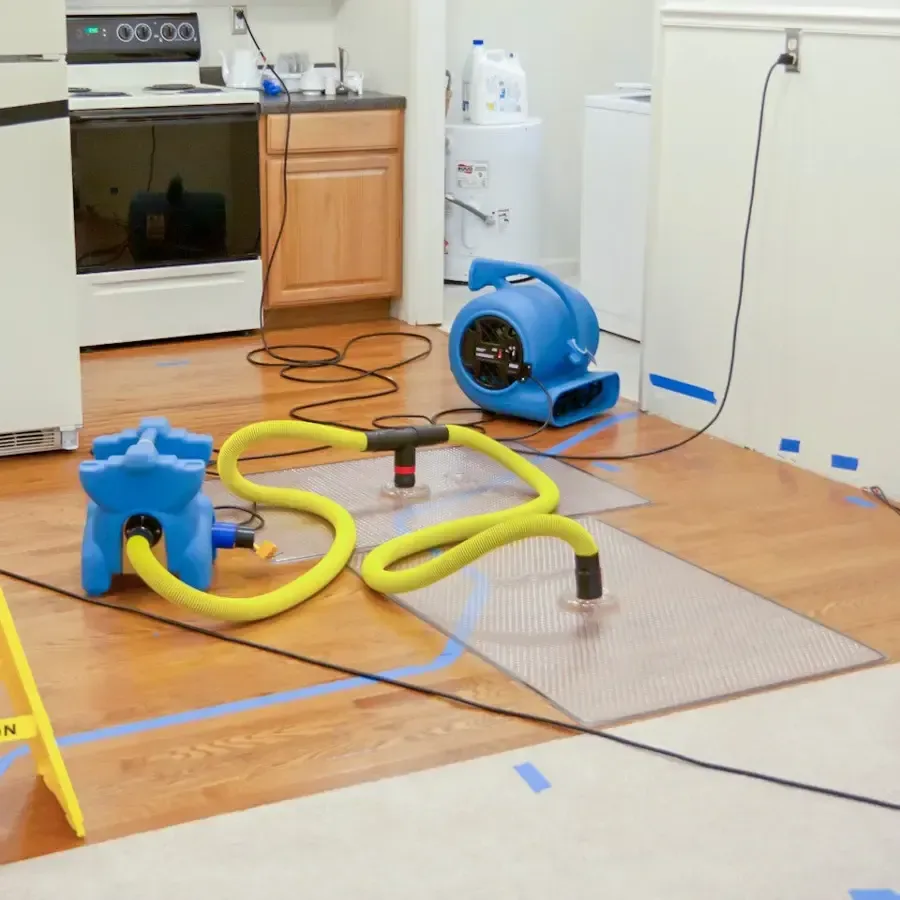
First steps for structural drying and dehumidification in Howell
Leave the equipment on
Air movers and dehumidifiers work around the clock.
Keep doors as set
Doors and windows stay the way the drying team left them.
Keep the heat steady
A steady indoor temperature keeps drying on track.
Report changes
Call if a unit stops, a breaker trips or new water appears.
How a structural drying and dehumidification job is handled
Readings before equipment
The tech who does the walkthrough checks walls, floors and the basement slab with pinless meters and thermal imaging before a single fan is placed.
Dried to IICRC S500
The drying team follows IICRC S500, the industry drying standard, so framing and subfloor get structural drying, not a surface wipe.
A file the adjuster can follow
Moisture maps, daily logs and timestamped photos go into one claim file from the first visit to the last reading.
Built for Michigan winters
Frozen pipes, ice dams, snowmelt seepage and sump pumps that quit in a storm are routine work across Livingston County.
What does structural drying and dehumidification cost in Howell, MI?
Structural drying typically runs $1,000 to $5,000 for a home, priced by the equipment and the days it runs. The drivers are the class of loss, the materials involved, how many rooms are drying and how many days readings take to reach the goal.
One or two rooms
$800 to $2,000
- A few air movers and a dehumidifier
- Daily readings
- Three to four days
Basement or several rooms
$2,000 to $5,000
- Multiple dehumidifiers
- Cavity and floor drying
- Four to six days
Class 4 materials
$5,000 to $10,000+
- Desiccant dehumidifiers
- Hardwood, plaster or concrete
- Six days or more
Ranges are typical, not a quote: water category, wet square footage, material class and how fast drying started move the number most. Run the water damage cost calculator for a closer planning range.
The structural drying and dehumidification process, start to dry
Four stops, run in this order, with a reading logged at each one.
- 1
Map and set the goal
Wet materials are mapped and a dry reference is read.
- 2
Place equipment
Air movers and dehumidifiers are set to the evaporation load.
- 3
Log every day
Readings, temperature and humidity are recorded daily.
- 4
Verify and remove
Equipment comes out when readings reach the goal.
Structural drying is the part of a water job that decides whether the problem comes back. Drywall that feels dry can still hold water at the bottom plate, and a basement slab or a plaster wall in an older house can take a week to give up what it absorbed. The drying team's job is to bring every wet material back to its normal moisture level and to prove it with readings.
How the drying plan is set
- The class of loss, 1 to 4, sets how much equipment a room needs.
- Air movers are placed for the room's evaporation load, aimed along wet walls.
- LGR dehumidifiers handle most homes; desiccant units handle dense materials and cold spaces.
- Wall cavities and hardwood get specialty drying where needed.
- Daily readings record temperature, humidity and material moisture.
Drying a Michigan house
Basements, plaster and old-growth framing hold water differently from new drywall. In winter, the drying team warms the space so materials release water; in humid summer weather, the dehumidifiers carry more of the load. A house closed up for the season needs its air managed so moisture does not move into dry rooms.
The EPA mold and moisture guidance explains why drying wet materials within 24 to 48 hours matters, and the EPA indoor air quality pages cover humidity in the home.
How dry is dry
The drying goal is a reading within 2 to 4 points of a dry reference material of the same type in the same home. Equipment leaves when readings say so, not on a set date, and the daily logs go into the claim file. Estimate a timeline with the drying time estimator.
Structural Drying and Dehumidification across Livingston County
The restoration crew covers ZIP codes 48843 and 48855: downtown along Grand River Avenue, the historic district, the Thompson Lake side and the subdivisions in Genoa, Oceola and Marion townships, out to Lake Chemung, Chilson and Oak Grove.
Related water damage services
Structural Drying and Dehumidification questions in Howell, MI
Why do the fans have to run for days?
Surfaces dry fast, but water inside framing, subfloor and concrete moves out slowly. The equipment keeps pulling it out until readings reach the goal.
What is a dry reference material?
A matching material in an unaffected part of the same home. Its reading sets the target for the wet material.
What is the difference between LGR and desiccant dehumidifiers?
LGR units cool the air to condense water and work well in most homes. Desiccant units use a drying wheel and work better in cold spaces and on dense materials like concrete and hardwood.
Can the equipment be turned off at night?
It is best not to. Drying is continuous, and stopping lets humidity climb back up.
Why is the electric bill higher during drying?
Air movers and dehumidifiers draw steady power. Some insurers reimburse the extra cost; coverage depends on your policy, so it is worth checking with your own insurer.
How is drying documented?
Daily psychrometric logs and material readings show progress and the final dry readings, which go into the claim file.
Still wet inside the walls? Get structural drying set up.
Hidden moisture in framing and concrete keeps causing trouble until it is dried to a reading. The drying team works around the clock.