Commercial Water Damage in Howell, MI
A burst pipe, a roof drain or a sprinkler failure can shut a business down. The restoration contractor who responds extracts the water, sets drying in phases so open areas can keep working and documents every step for the claim.
(888) 612-9219Water in the business? Call dispatch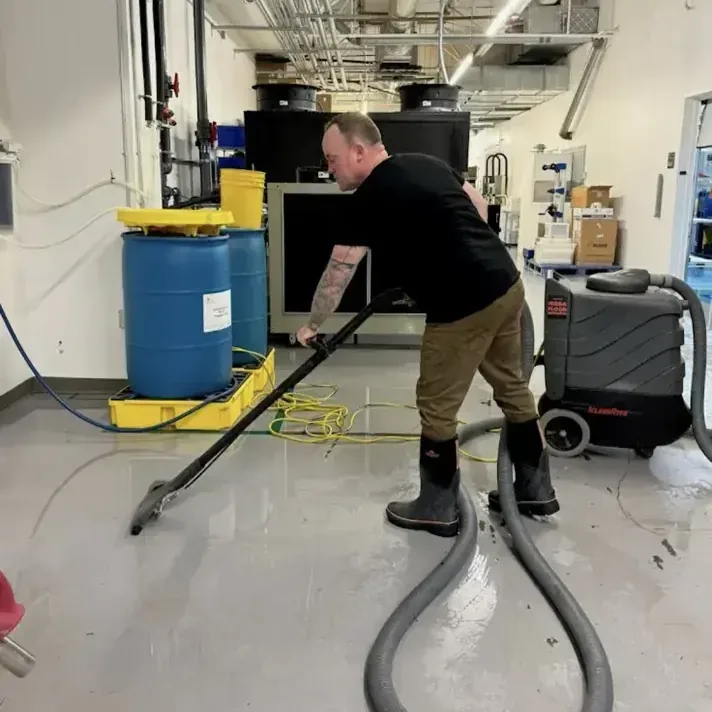
First steps for commercial water damage in Howell
Shut off the water
Close the main or the zone valve; for a sprinkler, call the alarm company too.
Protect people
Keep staff and customers away from wet floors and wet electrical.
Move inventory
Lift stock and records off the floor.
Document the scene
Photograph damage, stock and equipment before cleanup.
How a commercial water damage job is handled
Readings before equipment
The tech who does the walkthrough checks walls, floors and the basement slab with pinless meters and thermal imaging before a single fan is placed.
Dried to IICRC S500
The drying team follows IICRC S500, the industry drying standard, so framing and subfloor get structural drying, not a surface wipe.
A file the adjuster can follow
Moisture maps, daily logs and timestamped photos go into one claim file from the first visit to the last reading.
Built for Michigan winters
Frozen pipes, ice dams, snowmelt seepage and sump pumps that quit in a storm are routine work across Livingston County.
What does commercial water damage cost in Howell, MI?
Commercial water damage typically runs $3,000 to $25,000 or more, depending on the size of the space. The drivers are the square footage, the water category, materials such as carpet tile or drywall partitions and how the drying has to be phased around business hours.
Small shop or office
$2,500 to $7,000
- Extraction and spot removal
- Phased drying
- Three to five days
Multi-room or shared walls
$7,000 to $25,000
- Several units or suites
- Containment by zone
- Four to seven days
Large or Category 3 loss
$25,000 to $75,000+
- Large floor area
- Contaminated material removal
- Full structural drying
Ranges are typical, not a quote: water category, wet square footage, material class and how fast drying started move the number most. Run the water damage cost calculator for a closer planning range.
The commercial water damage process, start to dry
Four stops, run in this order, with a reading logged at each one.
- 1
Extract after hours
Standing water is removed, often outside business hours.
- 2
Map every zone
Moisture mapping covers shared walls, floors and ceilings.
- 3
Dry in phases
Containment and equipment are placed zone by zone.
- 4
Verify and document
Each zone is signed off on readings and logged.
Commercial buildings here range from the brick storefronts in the downtown historic district to strip centers and offices along Grand River Avenue and near the I-96 interchanges, plus churches, schools and apartment buildings. Older downtown buildings share walls and have finished space above the shops, so water from one unit often reaches the next. Flat roofs, roof drains and sprinkler pipes in unheated areas are frequent sources in winter.
Common causes in commercial buildings
- Frozen sprinkler and supply pipes in unheated areas.
- Flat roof leaks and clogged roof drains.
- Restroom and break room supply failures.
- Water heater and boiler leaks.
- Sewer backups through floor drains.
How commercial drying is run
The response team extracts water first, often after hours so the business can open. The tech who does the walkthrough maps moisture across shared walls and floors, and the drying plan is phased: containment around the drying zone, quieter equipment where people work, and daily readings for every area.
Records matter more on a business claim, so the file includes moisture maps, daily logs, photos and a line-item scope. OSHA covers workplace safety during cleanup, and Ready.gov business planning covers continuity after a water loss.
Keeping downtime short
Moving inventory, shifting staff to dry areas and drying in sections lets many businesses stay partly open. Upper-floor apartments and offices above downtown shops get checked too, since water crosses floors. For drying details, see structural drying.
Commercial Water Damage across Livingston County
The restoration crew covers ZIP codes 48843 and 48855: downtown along Grand River Avenue, the historic district, the Thompson Lake side and the subdivisions in Genoa, Oceola and Marion townships, out to Lake Chemung, Chilson and Oak Grove.
Related water damage services
Commercial Water Damage questions in Howell, MI
Can a business stay open during drying?
Often, in part. Drying in phases with containment lets unaffected areas keep working.
Who is responsible when water crosses from one unit to another?
That depends on the leases and the policies involved. The claim file documents where the water came from and where it went.
Is sprinkler water clean?
Sprinkler water sits in pipes for years and is usually dirty, so it is often treated as Category 2.
How quickly does commercial drying start?
Dispatch runs 24/7, and active water is treated as urgent. Extraction often happens after hours to limit disruption.
Is business interruption covered?
Some commercial policies include it. Coverage depends on your policy, so it is worth checking with your own insurer.
What documentation does a commercial claim need?
Moisture maps, daily psychrometric logs, timestamped photos, a list of damaged stock and a line-item scope.
Water damage at the business? Get it dried in phases.
Every day a business stays closed costs more than the drying. The restoration team works around the clock across the county.