Ice Dam Water Damage in Howell, MI
Snow melts on a warm roof, refreezes at the cold eaves and builds a ridge of ice that traps the next melt. That water backs up under the shingles and into the attic and walls. The restoration team finds where it went and dries it out.
(888) 612-9219Meltwater through the ceiling? Call now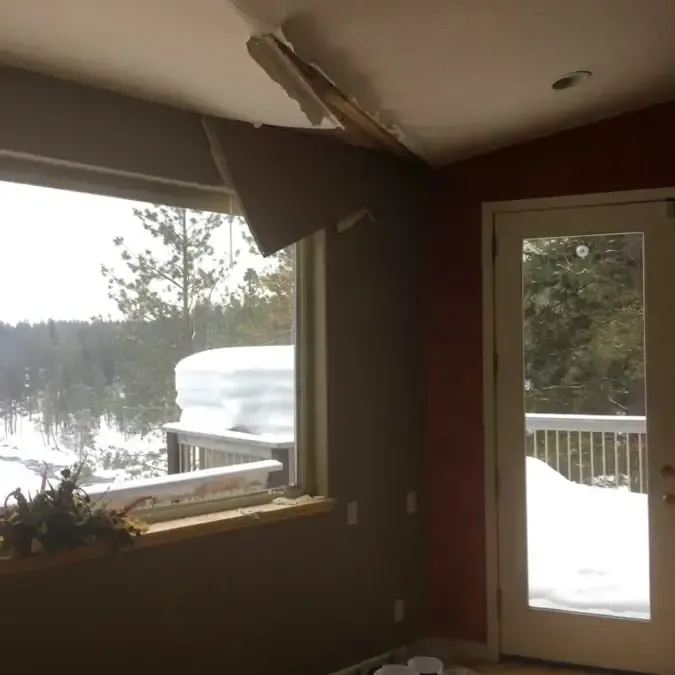
First steps for ice dam water damage in Howell
Catch the drips
Put containers under leaks and move furniture away from the wall.
Stay clear of a sagging ceiling
A ceiling that bulges is holding water and can come down.
Keep off the roof
Ice removal on a pitched roof belongs to a roofer.
Photograph inside and out
Record the ice along the eaves and every stain inside.
How a ice dam water damage job is handled
Readings before equipment
The tech who does the walkthrough checks walls, floors and the basement slab with pinless meters and thermal imaging before a single fan is placed.
Dried to IICRC S500
The drying team follows IICRC S500, the industry drying standard, so framing and subfloor get structural drying, not a surface wipe.
A file the adjuster can follow
Moisture maps, daily logs and timestamped photos go into one claim file from the first visit to the last reading.
Built for Michigan winters
Frozen pipes, ice dams, snowmelt seepage and sump pumps that quit in a storm are routine work across Livingston County.
What does ice dam water damage cost in Howell, MI?
Ice dam water damage typically runs $1,500 to $6,500 for the interior work, separate from roof repairs. The drivers are how much insulation got wet, how many rooms show ceiling and wall damage and how long the leak ran before it was found.
One ceiling area
$900 to $2,500
- Ceiling opened and dried
- Insulation pulled near the eave
- Three to four days of equipment
Several rooms and walls
$2,500 to $6,500
- Exterior wall cavities opened
- Attic insulation removed
- Four to six days of drying
Long-running winter leak
$6,500 to $15,000+
- Ceilings, walls and flooring
- Large insulation removal
- Full structural drying
Ranges are typical, not a quote: water category, wet square footage, material class and how fast drying started move the number most. Run the water damage cost calculator for a closer planning range.
The ice dam water damage process, start to dry
Four stops, run in this order, with a reading logged at each one.
- 1
Check the attic
Insulation and sheathing near the eaves are inspected for water and spread.
- 2
Map ceilings and walls
Thermal imaging and meters show where the meltwater travelled.
- 3
Remove wet insulation
Soaked insulation and failed drywall come out.
- 4
Warm and dry
Heat and dehumidifiers dry the framing to the goal.
Ice dams form in the stretches of winter when heavy snow sits on a roof and the attic below runs warm. Heat escaping through the ceiling melts the snow from underneath, the water runs down to the overhang, which is as cold as the outside air, and it freezes there. Each melt adds to the ridge until water pools behind it and works under the shingles. The leak shows up as stains along the top of outside walls, wet window trim or drips at the ceiling edge.
Signs of ice dam water damage
- Thick ice along the eaves and icicles at the gutters.
- Stains on the ceiling near outside walls.
- Peeling paint or wet trim around upper windows.
- Damp, matted attic insulation near the eaves.
- Water running inside an outside wall.
How the water damage is handled
Roof ice removal and roof repairs are roofing work. The restoration side starts in the attic: the tech who does the walkthrough checks insulation and roof sheathing near the eaves, then maps ceilings and outside walls with thermal imaging and meters.
Wet, compressed insulation does not dry well in place and usually comes out. Ceiling drywall that holds water is opened, and exterior wall cavities with wet insulation are opened from inside so the framing can dry. Drying in winter needs heat and dehumidifiers working together.
Cutting down the next ice dam
Air sealing and insulation at the ceiling keep attic heat off the roof deck, and good soffit and ridge ventilation keeps the roof cold. Raking snow off the lower roof edge after big storms helps. The National Weather Service winter safety page covers winter storms, and Ready.gov winter weather tips cover home prep. For a leak from shingles or flashing in a rainstorm, see roof leak water damage.
Ice Dam Water Damage across Livingston County
The restoration crew covers ZIP codes 48843 and 48855: downtown along Grand River Avenue, the historic district, the Thompson Lake side and the subdivisions in Genoa, Oceola and Marion townships, out to Lake Chemung, Chilson and Oak Grove.
Related water damage services
Ice Dam Water Damage questions in Howell, MI
What causes ice dams?
Heat leaking from the house warms the roof deck and melts snow from underneath. The water refreezes at the cold eaves, and the ridge of ice traps the next melt, which backs up under the shingles.
Is an ice dam leak a roof problem or an attic problem?
Usually both. The roof sheds water, but the cause is attic heat and ventilation. A roofer handles the roof, and the restoration team dries the attic, ceilings and walls.
Does wet attic insulation have to be replaced?
Usually. Wet fiberglass or cellulose compresses and loses its insulating value, and it holds water against the ceiling and framing.
Can ice dam water get inside walls?
Yes. Meltwater can run down inside exterior walls and soak insulation behind the drywall, which is why stains often appear near windows and corners.
Is ice dam damage covered by insurance?
Many policies cover sudden interior water damage from ice dams, while the roof itself is treated separately. Coverage depends on your policy, so it is worth checking with your own insurer.
How long does ice dam damage take to dry?
Three to six days is common. Winter drying needs heat, and the ceiling or wall must be opened so the framing can dry.
Ice dam leaking inside? Get the attic and walls dried.
Meltwater soaks insulation and runs inside walls well before it shows. The drying team works around the clock across the county.