Water Extraction and Removal in Howell, MI
Standing water keeps soaking into pad, drywall and framing until it is pulled out. The extraction crew sets up truck-mounted units, removes the bulk water from floors and basements, and hands off to drying with every reading logged.
(888) 612-9219Standing water now? Start the pump-out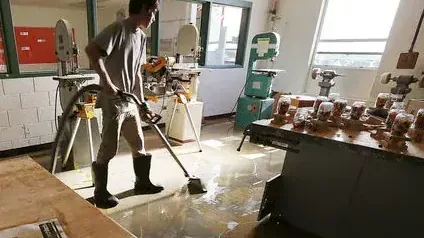
First steps for water extraction and removal in Howell
Stop the source
Close the main valve, or the fixture shutoff if the leak is local.
Kill power to wet areas
Only from a dry panel; never step into water near live outlets.
Move what you can
Lift boxes, rugs and electronics off the wet floor.
Photograph first
Wide and close shots before anything is moved or thrown out.
How a water extraction and removal job is handled
Readings before equipment
The tech who does the walkthrough checks walls, floors and the basement slab with pinless meters and thermal imaging before a single fan is placed.
Dried to IICRC S500
The drying team follows IICRC S500, the industry drying standard, so framing and subfloor get structural drying, not a surface wipe.
A file the adjuster can follow
Moisture maps, daily logs and timestamped photos go into one claim file from the first visit to the last reading.
Built for Michigan winters
Frozen pipes, ice dams, snowmelt seepage and sump pumps that quit in a storm are routine work across Livingston County.
What does water extraction and removal cost in Howell, MI?
Water extraction typically runs $300 to $1,500 on its own, and most jobs bundle it with drying for $1,200 to $5,000. The drivers are the gallons involved, the square footage, carpet versus hard floors and whether the water is Category 1 or worse.
Small area, clean water
$300 to $900
- One room or a hallway
- Portable or truck-mounted unit
- Carpet floated where possible
Basement or several rooms
$900 to $2,500
- Truck-mounted extraction
- Pad pulled and bagged
- Submersible pump if needed
Extraction plus full drying
$1,200 to $5,000
- Extraction, removal and drying
- Air movers and LGR dehumidifiers
- Daily readings for the claim file
Ranges are typical, not a quote: water category, wet square footage, material class and how fast drying started move the number most. Run the water damage cost calculator for a closer planning range.
The water extraction and removal process, start to dry
Four stops, run in this order, with a reading logged at each one.
- 1
Confirm and map
The tech who does the walkthrough confirms the source is off and maps the wet edge with meters.
- 2
Pull the bulk water
The extraction crew runs truck-mounted and portable units until the wand stops pulling water.
- 3
Remove what will not dry
Saturated pad and any Category 3 materials come out and are bagged.
- 4
Set the drying
Air movers and dehumidifiers go in, sized to the room, with readings logged daily.
Extraction is the cheapest part of drying. Every gallon pulled out as liquid is a gallon the dehumidifiers never have to pull out of the air, so the extraction crew removes as much as the materials will give up before any air mover is placed. In local homes that usually means a basement: water across a concrete floor, under carpet and pad, and into the bottom plate of finished walls.
Where standing water hides in a basement
- Under carpet pad, long after the carpet surface feels damp instead of wet.
- In the bottom plate and insulation behind finished drywall.
- Around the floor drain and the sump pit, where the slab dips.
- Inside stored boxes, under furniture legs and beneath a floating floor.
- In the gap between a basement wall and its framing.
How water extraction is done
The tech who does the walkthrough first confirms the source is stopped and the power to wet areas is off. Truck-mounted units, which run off the truck instead of a household outlet, pull the bulk water. Portable extractors and submersible pumps reach spaces the hoses cannot, and weighted extraction tools press water out of carpet and pad.
Carpet over clean water can often be floated and dried in place. Pad usually comes out, because it holds water like a sponge and costs little to replace. After Category 2 or 3 water, carpet and pad both go.
What happens after the water is out
Extraction ends when the wand stops pulling water, not when the floor looks dry. The drying team then maps what is still wet, sets air movers and LGR dehumidifiers to the load and returns daily for readings. See structural drying for how that phase runs.
The EPA moisture and mold guidance stresses drying wet materials within 24 to 48 hours, and Ready.gov flood safety explains when standing water is unsafe to enter.
Water Extraction and Removal across Livingston County
The restoration crew covers ZIP codes 48843 and 48855: downtown along Grand River Avenue, the historic district, the Thompson Lake side and the subdivisions in Genoa, Oceola and Marion townships, out to Lake Chemung, Chilson and Oak Grove.
Related water damage services
Water Extraction and Removal questions in Howell, MI
How fast does standing water need to come out?
As soon as possible. Water keeps wicking into drywall, framing and pad, and mold can start within 24 to 48 hours in a warm, damp basement.
Can carpet be saved after extraction?
Often, after clean Category 1 water that is extracted quickly. The pad usually comes out. After gray or black water, carpet and pad are both removed.
Is a shop vac enough?
For a small spill, maybe. For anything that soaked carpet or reached walls, a shop vac leaves most of the water in the pad and the wall base, which is where the damage keeps growing.
Why use truck-mounted extraction?
Truck-mounted units have more suction than portable machines and run off the truck instead of household power, which matters when the panel or outlets are wet.
Does extraction mean the job is done?
No. Extraction removes the liquid; structural drying removes the moisture left in materials. Equipment stays until readings reach the drying goal.
Is water extraction covered by insurance?
When the cause is a covered sudden event, extraction is normally part of the mitigation scope. Coverage depends on your policy, so it is worth checking with your own insurer.
Standing water on the floor? Get it pulled out now.
Every hour water sits, more of it soaks into pad, drywall and framing. The extraction crew works around the clock across the county.