Appliance and Supply Hose Leaks in Howell, MI
A burst washer hose, a dishwasher that leaks under the cabinets or a cracked ice maker tube can run for hours. The water gets under flooring and into cabinet bases. The restoration team extracts it and dries the floor system underneath.
(888) 612-9219Washer or dishwasher flood? Call now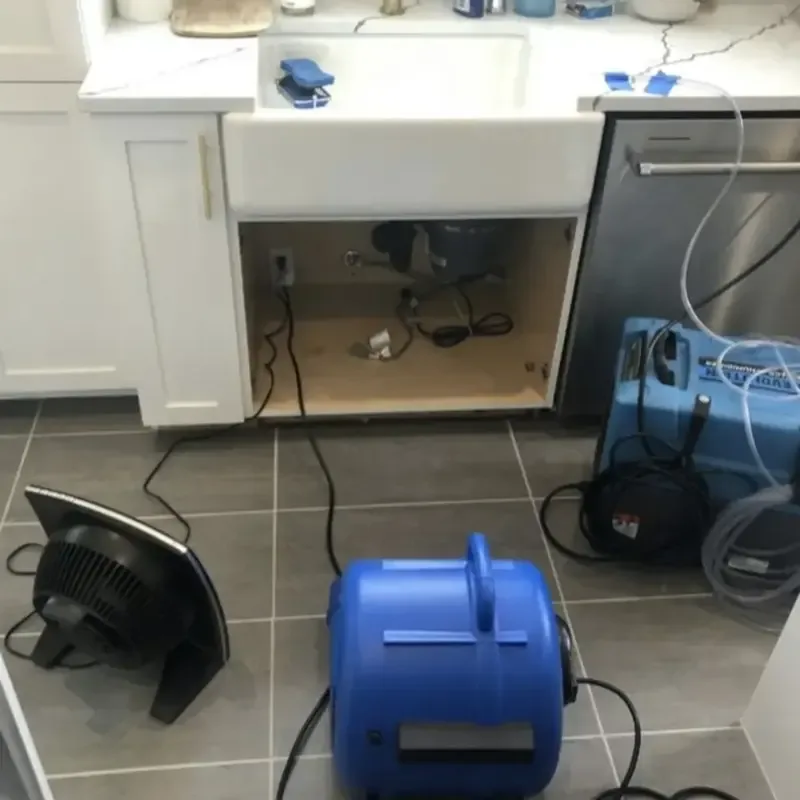
First steps for appliance and supply hose leaks in Howell
Shut the valve
Close the shutoff behind the appliance, or the main valve.
Unplug safely
Cut power to the appliance from a dry spot.
Pull back what you can
Move rugs and empty the cabinet under the sink.
Photograph it
Record the failed hose, the floor and the cabinets.
How a appliance and supply hose leaks job is handled
Readings before equipment
The tech who does the walkthrough checks walls, floors and the basement slab with pinless meters and thermal imaging before a single fan is placed.
Dried to IICRC S500
The drying team follows IICRC S500, the industry drying standard, so framing and subfloor get structural drying, not a surface wipe.
A file the adjuster can follow
Moisture maps, daily logs and timestamped photos go into one claim file from the first visit to the last reading.
Built for Michigan winters
Frozen pipes, ice dams, snowmelt seepage and sump pumps that quit in a storm are routine work across Livingston County.
What does appliance and supply hose leaks cost in Howell, MI?
Appliance leak water damage typically runs $800 to $5,000. The drivers are how long the leak ran, the flooring type, whether cabinets must be opened and whether the water reached a ceiling or basement below.
Caught quickly
$600 to $1,800
- Surface extraction
- Air movers and a dehumidifier
- Two to three days of drying
Under cabinets and flooring
$1,800 to $5,000
- Toe kicks removed
- Hardwood drying mats
- Three to five days of drying
Upstairs laundry, ceiling below
$5,000 to $10,000+
- Two levels affected
- Ceiling drywall opened
- Full structural drying
Ranges are typical, not a quote: water category, wet square footage, material class and how fast drying started move the number most. Run the water damage cost calculator for a closer planning range.
The appliance and supply hose leaks process, start to dry
Four stops, run in this order, with a reading logged at each one.
- 1
Find the edges
Meters show how far water went under flooring and cabinets.
- 2
Extract
Surface water and water in carpet are pulled out.
- 3
Open for airflow
Toe kicks or baseboards come off where air must reach.
- 4
Dry and confirm
Drying runs until subfloor and cabinets reach the goal.
Appliance leaks are among the most common water losses in any house, and in the newer subdivisions around the city many laundry rooms sit on the second floor or right beside finished space. A rubber washer hose can split without warning, a dishwasher can leak slowly for weeks, and a refrigerator ice maker tube can crack behind the unit where nobody looks.
Common appliance leak sources
- Rubber washer fill hoses and the drain hose.
- Dishwasher door seals, pumps and the supply connection.
- Refrigerator ice maker and water dispenser tubing.
- Toilet supply connectors and fill valves.
- Kitchen sink supplies and garbage disposals.
How the water damage is handled
The tech who does the walkthrough checks under the appliance, inside the cabinet bases and through the floor with meters, because water runs under vinyl, laminate and hardwood and into the subfloor. The extraction crew pulls what it can from the surface.
Clean supply water is Category 1; washer drain water and dishwasher discharge are Category 2. Cabinet toe kicks may come off so air can reach underneath, and specialty drying mats pull water out of hardwood. Laminate that swells usually cannot be saved.
Preventing the next leak
Braided stainless washer hoses, a leak alarm under the dishwasher and refrigerator and a quick look under the sink now and then catch most failures early. The EPA WaterSense leak checks explain how to find hidden leaks, and the CPSC lists appliance recalls. For a failure inside the wall itself, see burst pipe water damage.
Appliance and Supply Hose Leaks across Livingston County
The restoration crew covers ZIP codes 48843 and 48855: downtown along Grand River Avenue, the historic district, the Thompson Lake side and the subdivisions in Genoa, Oceola and Marion townships, out to Lake Chemung, Chilson and Oak Grove.
Related water damage services
Appliance and Supply Hose Leaks questions in Howell, MI
Why does a small appliance leak cause so much damage?
Slow leaks run unseen under flooring and cabinets for days or weeks, soaking the subfloor long before anything shows.
Can hardwood be dried after a dishwasher leak?
Often, if drying starts quickly. Specialty mats draw water out of the boards and subfloor. Cupping that does not settle after drying may need refinishing.
Is washer water clean?
Fill water is clean, but drain water carries soap, lint and soil, so a drain hose leak is treated as Category 2.
Should rubber washer hoses be replaced?
Many manufacturers suggest replacing them every few years. Braided stainless hoses resist bursting better.
Is appliance leak damage covered by insurance?
A sudden leak is often covered; a long, slow leak may not be. Coverage depends on your policy, so it is worth checking with your own insurer.
Do the cabinets have to come out?
Usually not. Removing the toe kick lets air reach under the cabinet. Particleboard cabinet bases that swell may need replacing.
Appliance leak under the floor? Get it dried out.
Water from a washer or dishwasher runs under flooring and cabinets long before it shows. The restoration team works around the clock.