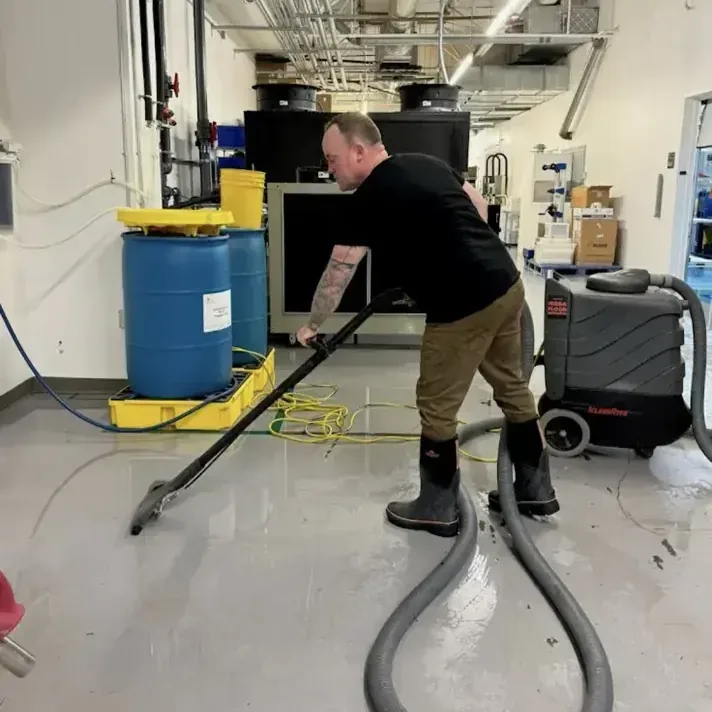
A shop, office or clinic that finds water on the floor on a weekday morning has a clock running. Stock, records, power and the front door all depend on how the first day goes. Here is that day for owners along Grand River Avenue and the blocks around it.
Key takeaways
- Stop the source first, then arrange water extraction, because standing water spreads into walls and neighboring spaces the longer it sits.
- Lift stock, files and electronics off wet floors and away from wet walls before any drying equipment goes in.
- Photograph the damage and list lost items as they are found, before anything is moved or thrown out.
- Older masonry storefronts hold water in brick, plaster and framing, so a dry looking floor does not mean a dry building.
- Phased drying lets one part of a business keep trading while another part is opened up and dried.
Why downtown storefronts need their own plan
Five blocks of Grand River Avenue form the Howell Downtown Historic District, listed in 1987. The city was platted in 1835 and became the Livingston County seat in 1836.
A single block in a district like this can hold a clinic, an office, a restaurant and a shop. Where storefronts sit side by side, water from one tenant can reach the next.
That mix shapes the first day. The cleanup has to protect more than one business, more than one set of records and often more than one owner.
- Shops: stock on low shelves, cardboard storage and floor displays take water first.
- Offices: paper files, servers and floor outlets are the costly losses.
- Clinics: patient areas need an orderly path back to service.
- Restaurants: floor drains, kitchen equipment and walk in coolers add steps.
The first steps, in order
The order matters more than speed on any single step. A calm first sequence saves stock and shortens the drying that follows.
- Close the main valve or the fixture valve if it is safe to reach. When the water came from above, ask the upstairs tenant to shut off theirs.
- Cut power to wet areas at the panel only when the panel and the floor around it are dry. Otherwise leave it alone and call an electrician.
- Move stock, files and electronics up and out of the water path.
- Photograph wet floors, walls, ceilings and every damaged item with the date visible.
- Arrange water extraction so standing water is removed before it soaks into plaster and framing.
What extraction and moisture checks decide
The restoration crew starts by removing standing water with pumps and extractors. That stops the soak while the rest of the plan is built.
Moisture meters then map the floors, walls and ceilings, because materials that look dry can still hold water. The readings decide what is dried in place and what is cut out.
Floors and walls
Tile and sealed concrete usually dry in place. Carpet, pad and soaked baseboard are often removed.
Drywall that wicked water upward is cut above the wet edge, and plaster is checked before any decision is made.
Ceilings and the space above
A ceiling stain in a shop can come from an upstairs office, a roof or a pipe in a wall. Tracing the source comes before drying it.
Wet insulation above a ceiling is removed, because it keeps releasing water long after the leak stops.
- A sagging ceiling tile or panel can drop, so staff and customers stay clear.
- Brown or yellow stains that keep spreading mean water is still moving.
Beyond the visible water
Standing water is the smaller part of most jobs. Moisture travels into places nobody looks, and the readings follow it.
A shop that dries only what it can see usually finds the rest later, as peeling paint, lifted flooring or a musty back room.
- Behind wall panels, display fixtures and built in cabinets.
- Under floor coverings and inside the subfloor.
- Inside wall cavities shared with the next tenant.
- Above ceilings, where insulation and ductwork hold water.
- Along baseboards and door frames at the edge of the wet area.
When the water comes from outside the building
A burst pipe is not the only source. Heavy rain, a failed roof or storm water backing up at a door brings outside water into a shop, and outside water is treated as contaminated.
Summer thunderstorms are one trigger, and the remnants of Hurricane Beryl brought a flood watch to Livingston County in July 2024. Snowmelt and spring rain add to the risk.
Outside water changes the plan. Porous materials it soaked, such as carpet, ceiling tile and insulation, are removed, and hard surfaces are cleaned before drying starts.
The storm and snowmelt flood cleanup steps cover that sequence.
- Move stock to shelves above the water mark.
- Keep staff out of standing water while the power is on.
- Photograph the water mark before it dries.
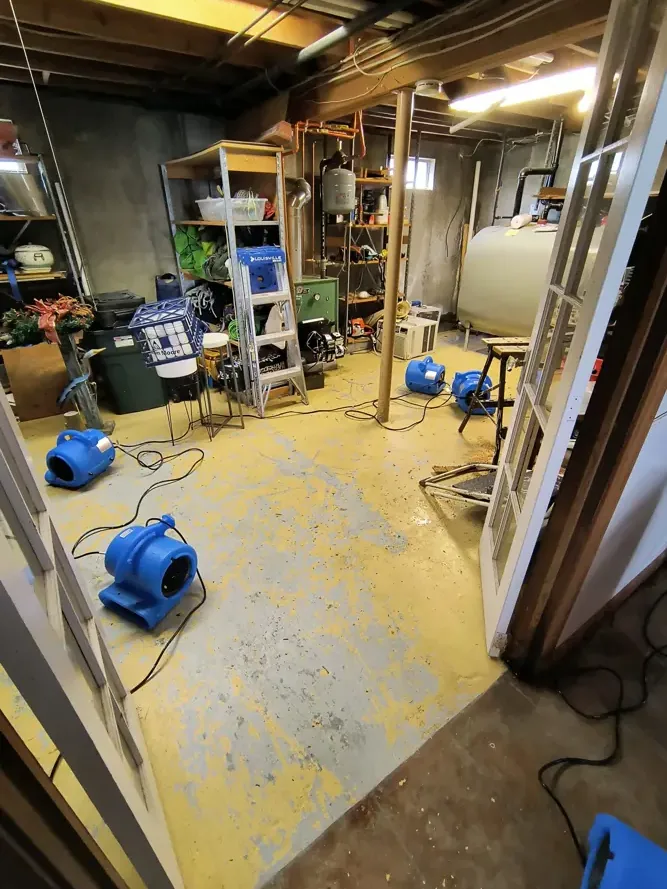
Drying in phases while the doors stay open
Most owners cannot close for the length of a full dry out. Phased drying splits the space into zones, so equipment and removal work stay in the wet zone while customers use the dry one.
Plastic containment and a clear walkway keep noise, dust and wet materials away from the public area. Equipment is set up and moved as the readings improve.
Full structural drying covers framing, subfloors and masonry, not just the surface. Readings, not appearance, decide when a zone is finished, and the work follows the IICRC S500 standard.
- Zone one: the wet area, sealed off and drying with air movers and dehumidifiers.
- Zone two: the buffer area, checked daily for spread.
- Zone three: the working area, kept open for customers and staff.
- Loud work is scheduled for closed hours whenever the building allows it.
Records for the landlord and the claim
Tenants and owners each need a record. A tenant tells the landlord or property manager right away and keeps copies of every message.
Owners and tenants alike keep the photos, the moisture readings and the list of damaged goods in one place. A claim is built from that record, so it helps to start it on day one.
- The date and time the water was found, and what was done first.
- Photos taken before and after anything is moved.
- A running list of damaged stock, equipment and furniture.
- Receipts for emergency repairs, tarps and temporary storage.
Reopening after the readings are dry
When the readings reach the dry goal, the equipment goes out and repairs begin: new drywall, flooring and paint. Restocking waits until the repairs are done.
Businesses along Michigan Avenue and the I-96 business corridor face the same steps, even when the building is newer. A commercial water damage job ends with a written record of each reading and each material removed.
Questions
Can a business stay open while drying equipment runs?
Often a part of it can. Phased drying separates the wet zone from the open zone, though a flooded sales floor or kitchen usually has to close until extraction and removal are done.
Should the water be shut off before anyone is called?
If the valve is safe to reach, yes. Stopping the source limits the damage, and extraction can be arranged right after.
What if the water came from the space upstairs?
The upstairs space is the source, so it has to be stopped there. The wet space below is documented and dried, and the landlord or property manager is told in writing.
Do old brick buildings take longer to dry?
Masonry, plaster and old framing can hold water longer than a modern surface. The crew checks readings inside the wall, not just on the floor, and drying continues until they reach the goal.
Does rain water coming in change the cleanup?
Yes. Water from rain or the street is handled as contaminated, so soaked porous materials are removed and hard surfaces are cleaned before drying.
What should be photographed first?
Standing water and the wet edge on walls, then each damaged item. Photos are taken before anything is moved or thrown out.