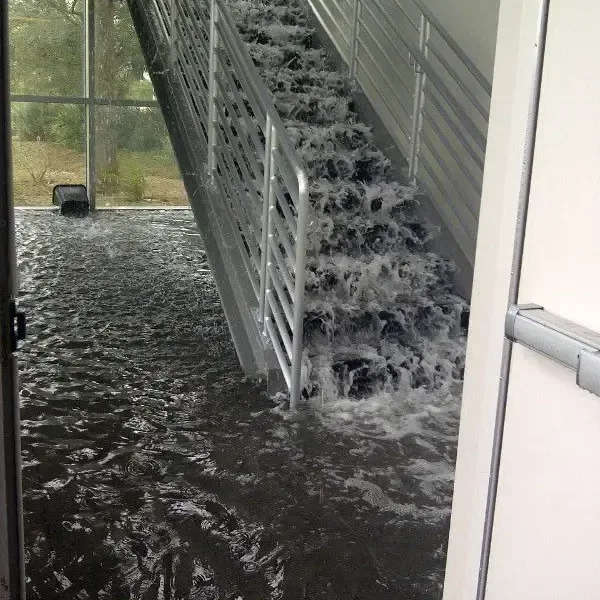
Older houses often carry galvanized supply pipe and cast iron drains, two materials with well known ways of failing. When one lets go behind plaster, the damage shows late and spreads wide.
Key takeaways
- Galvanized supply pipe can corrode from the inside and leak at joints, while cast iron drains can crack or rust through.
- A supply pipe leak starts as clean water, but drain water is gray or black and is treated differently.
- Leaks inside plaster walls and ceilings show late, as stains, bulges or a musty smell.
- Walls are opened where moisture readings show water, because a dry looking surface proves nothing.
- Repairing the pipe is plumbing work, and extraction and drying are a separate job that has to follow it.
The older houses of the city and what runs inside them
The city was platted in 1835 and became the Livingston County seat in 1836. Five blocks of Grand River Avenue form the Howell Downtown Historic District, listed in 1987.
Queen Anne and Italianate homes from the 1880s stand inside the city, and basements sit under most homes. The local risk profile for older houses lists galvanized pipe and cast iron drains, and each has a typical way of failing.
How galvanized supply pipe fails
Galvanized steel pipe wears a zinc coating, and the coating thins over the decades. Rust forms inside, the passage narrows and the weak points are threaded joints and elbows.
A repair on one section does not fix the rest. A pipe that has leaked once often has other thin spots, so a plumber may suggest replacing a longer run, and that choice changes how many walls are opened.
- Pinhole leaks that spray inside a wall.
- Slow weeping at threaded joints.
- Low water pressure at upstairs fixtures.
- A leak that returns after a patch.
How cast iron drains fail
Cast iron drain pipe is heavy and long lived, but joints loosen, and the bottom of a flat run can rust through. The pipe may look sound from outside while the inside is flaking.
Why drain water is different
Water from a drain pipe is not clean. A leak from a kitchen, bath or toilet drain is handled as gray or black water, so soaked porous materials are removed.
When the leak carries toilet waste, the job moves into sewage and septic backup cleanup territory.
Where it shows
A stain on the ceiling below a bathroom is a common sign, and a basement ceiling under a bath often tells the story first.
- A sewer smell near a wall or a floor.
- Damp insulation around a drain stack.
- A stain that grows after the tub or shower is used.
Supply leaks and drain leaks side by side
The two kinds of leak call for different cleanup, so telling them apart early saves time.
- Supply pipe leak: clean water, constant when the pressure is on, stops when the main valve is closed.
- Drain pipe leak: waste water, shows up when a fixture is used, and may carry a sewer smell.
- Supply leaks are cleaned and dried, and drain leaks add the removal of soaked porous materials.
- A stain that grows only after the tub or washer runs points to a drain.
Basements under most homes: where old pipes show first
Basements sit under most homes here, and that helps. Supply pipe and drain pipe often run along the joists overhead, where a drip is visible long before a wall stains.
A basement ceiling under a bathroom or a kitchen is the first place to look when a stain appears upstairs.
- Look along the joists for rust streaks, green crust at joints or wet insulation.
- Check around the drain stack for damp spots.
- Listen for dripping with the house quiet and the fixtures off.
- Compare the stain upstairs with the pipes directly below it.
What a hidden leak looks like in plaster and old framing
Plaster over wood lath hides moisture for a long time. By the time it shows, the damage behind it is wider than the stain.
- Stained or yellowed patches that keep growing.
- Paint that blisters or peels.
- Plaster that bulges or feels soft to the touch.
- A musty smell in one room.
- Baseboards that lift away from the wall.
The cleanup: open, extract, dry
The work starts with the water shut off and the standing water removed. Then moisture readings map the wall, the floor and the ceiling.
Opening the wall
Plaster and lath that stayed wet are cut out along the wet edge. Insulation is pulled out, because it holds water against the framing.
Start with a call about burst pipe water damage when water is moving, and water extraction when it is standing.
Drying the cavity
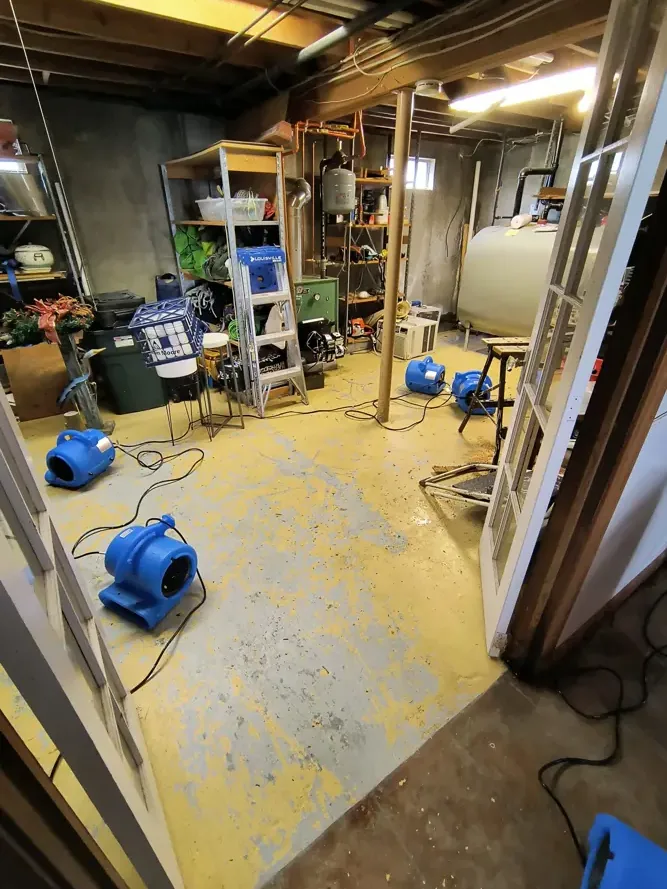
Air movers and dehumidifiers dry the framing, and readings confirm when the cavity can be closed. Full structural drying continues until each material reaches its target.
What the crew finds when a wall opens
The opening is usually larger than the stain suggested. The visible mark is only the edge of the wet area.
Readings set every cut, so the opening follows the water and not a guess.
- Wet plaster and lath that crumble or feel soft.
- A rusted joint or a pinhole on the pipe.
- Stained framing and a matted pack of insulation.
- A trail of damp that runs down toward the lowest point.
Pipe repair and drying are two jobs
A plumber repairs or replaces the failed pipe. The restoration crew handles the water that already got out.
The jobs go together, and the order matters.
Closing a wall before it reads dry traps moisture inside. Waiting for readings costs days but saves the repair from being done twice.
- Shut off the water to the house or the affected branch.
- Photograph the damage before the wall is opened.
- Keep the failed section of pipe if the plumber removes it.
- Ask for the final readings before any wall is closed.
Newer subdivisions have different weak points
The risk profile also covers 1990s colonials and ranch condos in Genoa, Oceola and Marion townships. Those homes have different weak points from the older houses in the city.
Aging water heaters, washer hoses and sump pumps are the usual causes there. A water heater leak in a newer house follows its own cleanup steps.
Questions
How can a homeowner tell if a house has galvanized pipe?
A plumber can tell by looking at exposed pipe and testing it. Gray, threaded steel pipe in a basement is a common sign.
Is a cast iron drain leak an emergency?
A leak from a drain carries waste water, so it is handled as contaminated, and the area is cleaned and dried.
Does a stain on a ceiling always mean a roof leak?
No. Stains below a bathroom or a kitchen often come from a supply pipe or a drain above.
Can plaster be saved after a pipe leak?
Sometimes. Readings decide: plaster that stayed wet or softened is removed, while dry, sound plaster stays.
Who fixes the pipe?
A plumber repairs or replaces the pipe. Extraction, removal and drying are separate work, and they have to follow it.
Why is a wall opened if only a small stain shows?
The stain is the visible edge of a wider wet area. Moisture readings find the true extent, and the opening follows the readings.