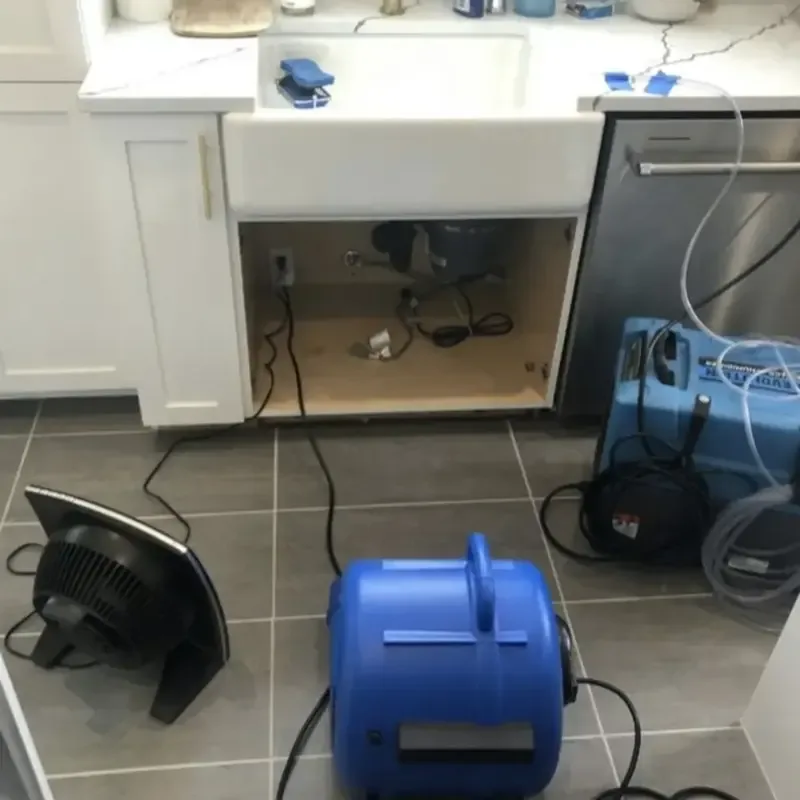
A water stain on a ceiling does not always start in the room above it. In a building with several units, the source can be a washer hose, a dishwasher or a toilet supply in the next unit over, or on another floor altogether.
Key takeaways
- A leak in one unit can reach the ceiling, walls and floor of the units below and beside it.
- Stopping the source comes first, and when it is in another unit, the neighbor or the property manager has to shut it off.
- Photograph the damage and message the landlord, association or manager in writing on the day the water is found.
- A sagging ceiling holds water and can drop, so people stay clear until a crew opens it.
- Drying is staged unit by unit, and a unit that reads dry can often stay in use.
Why a leak in one unit becomes a problem for several
Brighton has about 1,361 housing units in buildings of five or more units, plus 612 attached single family homes. That adds up to a great many shared walls, floors and ceilings.
The Livingston Daily reported in 2019 that downtown housing density was rising, with new apartments and condos near Mill Pond, First Street and Second Street.
Renters and owners both live in these buildings. The city counts 1,259 renter occupied households next to 2,505 owner occupied ones, so one leak often involves a tenant, an owner and a manager at once.
Why a small leak causes a large loss
A supply hose sits under constant pressure. When it fails, water keeps coming until someone shuts the valve, and in an empty unit that can be most of a day.
The water has several floors and walls to cross, and each layer hides it. By the time a stain shows on a ceiling, the floor above and the wall beside it are already wet.
Where the water usually starts
Most upstairs leaks come from a short list of sources, and nearly all of them are appliances or fittings, not pipes inside the walls.
- Washer supply hoses and drain hoses that crack or pop off.
- Dishwasher hoses and connections under the sink.
- Toilet supply connections and worn wax seals.
- A water heater tank in a closet.
- Ice maker supply tubing behind a refrigerator.
- A failed fitting inside a wall shared with the next unit.
What the stain says about the source
The place a stain appears gives a first guess about where the water started. A crew confirms it with readings, but the pattern helps a tenant or a manager know where to look.
- A stain under a kitchen points to a dishwasher, a sink or an ice maker above.
- A stain under a bathroom points to a toilet supply, a tub or a shower above.
- A stain in a hallway ceiling near a closet can point to a washer or a water heater.
- A stain that spreads along an exterior wall may come from the roof or a window instead of a unit above.
How the water travels down and sideways
Water follows gravity and the easiest path. It runs along floor joists, through gaps around pipes and fixtures and down wall cavities, then spreads under flooring and into insulation.
Ceilings below
Brown or yellow stains, bubbling paint and a ceiling that sags are signs of water collecting above the drywall.
A sagging ceiling can drop without warning, so people and pets stay clear until it is opened and drained.
Walls and floors beside and below
Wet drywall wicks water upward from the floor. Carpet and pad in the unit below or beside hold water, and hard flooring can cup and lift as it soaks.
- Baseboards that lift away from the wall.
- Carpet that feels cool and damp near a shared wall.
- A musty smell in a closet or a bedroom corner.
What the unit below should do right away
The order matters when the source is in another unit.
- Ask the neighbor above or beside to shut off the water to the washer, dishwasher or toilet that is leaking.
- If no one answers, call the property manager or the association and ask for the building shutoff.
- Photograph the ceiling, the walls and the floor, and list damaged belongings.
- Send a written message to the landlord or manager with the date and time the water was found.
- Arrange appliance leak cleanup so the water is extracted and the wet materials are checked.
- Keep people and pets away from a sagging ceiling.
When the unit above cannot be reached
Sometimes the neighbor is away and the door is locked. Tenants and owners should not force a door or enter another unit.
The property manager or the association holds the access and the building shutoff. A written message with photos of the ceiling gives them what they need to act, and it starts the record.
Staging the drying across units
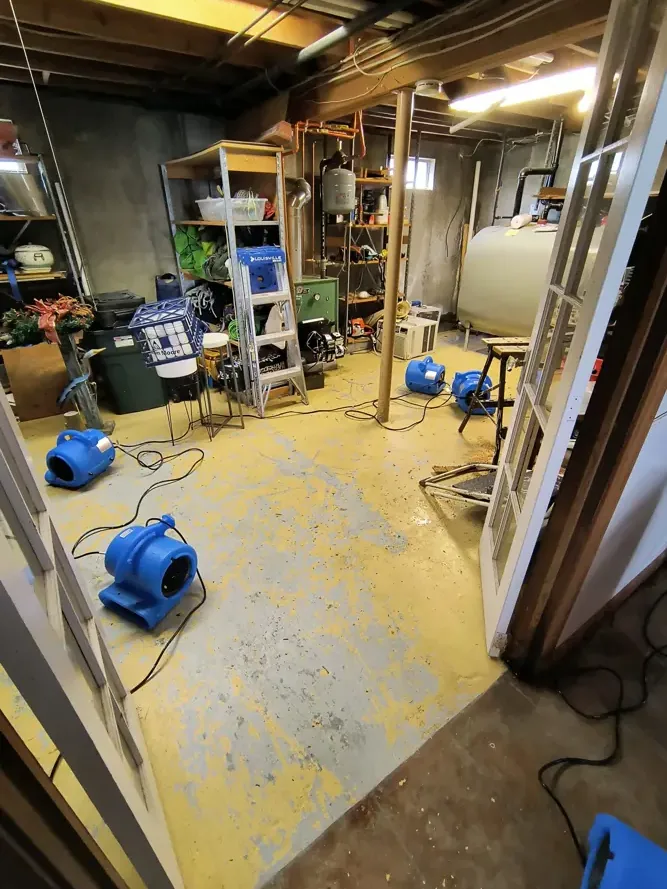
The restoration crew starts at the source unit, then checks the units below and beside it with moisture meters. Wet insulation and drywall are opened wherever the readings show water.
Equipment is placed so each unit dries without pushing wet air into the next one. A unit that reads dry stays in use.
Full structural drying continues until the readings reach the dry goal in every unit the water reached.
- Source unit: the leak is repaired, water is extracted and wet materials are removed.
- Unit below: the ceiling is opened if it holds water, and wall cavities are checked.
- Neighbor beside: the shared wall is read and dried if it is wet.
Renters, owners and the manager
Each party has a different job in the first days, and none of them needs to wait for the others.
Renters
A renter tells the landlord in writing, keeps the photos and saves every message. Belongings that cannot be moved are photographed where they sit.
Condominium and townhome owners
An owner tells the association or the manager and keeps a separate file of photos, readings and receipts. Shared walls and floors may belong to the association, so the first message goes to both.
Property managers
A manager can close the building shutoff, reach the unit above and call for a burst pipe cleanup when the failed part is a supply pipe rather than an appliance.
Records for the file
Responsibility between neighbors is a question for the lease, the association rules and the policies involved, and it is settled after the water is stopped. A clean record from the first day makes that conversation shorter.
- Photos, dates and copies of every message.
- Moisture readings from each unit.
- A list of ruined belongings.
- Receipts for emergency work and temporary housing.
- The unit and the appliance that were the source, if known.
Questions
Who shuts off the water when the leak starts in a neighbor's unit?
The neighbor can close the fixture valve, or the property manager can close the building shutoff. The wet unit below can reach out to both.
Should a sagging ceiling be poked to drain it?
Not by the occupant. A crew opens it in a controlled way so the water and the drywall come down where they can be managed.
Can a unit stay lived in during drying?
Often the dry rooms can. The wet rooms are opened and dried, and the readings decide when everything is done.
Who pays for damage between neighbors?
That depends on the lease, the association rules and the policies involved, and it is settled after the leak is stopped. Records from day one make that conversation easier.
What if nobody answers at the unit above?
The property manager or the association can reach the unit and the building shutoff. A tenant should not force a door, and should send photos and a written message instead.
How does water get from an upstairs unit to a ceiling below?
It runs along joists and through gaps around pipes and fixtures, then collects above the drywall. The stain often shows far from the real source.