Structural Drying in Brighton, MI
After the water is out, the structure still holds moisture. Dehumidifiers, air movers and daily readings pull it from framing, subfloors and walls until every material reaches a dry standard set from an unaffected area.
(888) 612-9219Dry the walls and floors for good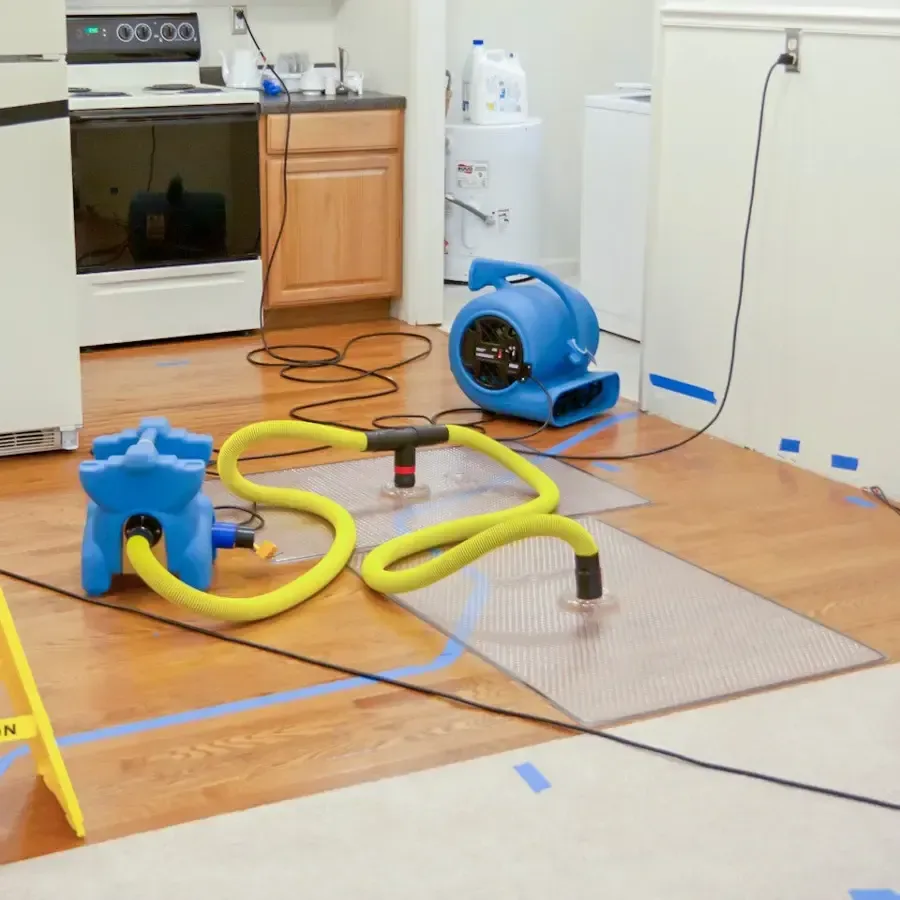
First steps for structural drying and dehumidification in Brighton
Keep the heat on
Warm air holds more moisture, so keep the thermostat steady.
Leave equipment running
Do not shut off dehumidifiers or fans, since early removal leaves damp materials.
Close doors
Keep wet rooms closed so dehumidifiers work on a smaller volume of air.
Empty the tanks
Check collection tanks if the unit has one, and keep filters clean.
How a structural drying and dehumidification job is handled
Readings before equipment
The tech who does the walkthrough checks walls, floors and the basement slab with pinless meters and thermal imaging before a single fan is placed.
Dried to IICRC S500
The drying team follows IICRC S500, the industry drying standard, so framing and subfloor get structural drying, not a surface wipe.
A file the adjuster can follow
Moisture maps, daily logs and timestamped photos go into one claim file from the first visit to the last reading.
Built for Michigan winters
Frozen pipes, ice dams, snowmelt seepage and sump pumps that quit in a storm are routine work across Livingston County.
What does structural drying and dehumidification cost in Brighton, MI?
Drying one or two rooms usually costs $800 to $2,000. A lower level or several rooms runs $2,000 to $5,000, and Class 4 materials such as hardwood, plaster or concrete can reach $5,000 to $10,000 or more because they dry slowly.
One or two rooms
$800 to $2,000
- A few air movers
- One dehumidifier
- Daily readings
Lower level or several rooms
$2,000 to $5,000
- Several dehumidifiers
- Cavity and floor drying
- Several days
Class 4 materials
$5,000 to $10,000+
- Desiccant dehumidifiers
- Hardwood, plaster, concrete
- Six days or more
Ranges are typical, not a quote: water category, wet square footage, material class and how fast drying started move the number most. Run the water damage cost calculator for a closer planning range.
The structural drying and dehumidification process, start to dry
Four stops, run in this order, with a reading logged at each one.
- 1
Measure
Meters and a thermal camera show which materials hold water.
- 2
Set up
Air movers, dehumidifiers and mats are placed for each room and material.
- 3
Monitor
Technicians return, record readings and adjust the equipment.
- 4
Release
Equipment is removed once every reading matches the dry reference.
More than half of the housing units in Brighton, about 2,182 of them, were built from 1970 to 1999, with older homes mixed in, so a drying plan follows the age and layout of each building rather than a template. Whatever the vintage, water that reaches framing, subfloors or wall cavities has to be pulled out on purpose, not left to air out. A room that feels dry to the hand can still be wet inside the wall.
How drying is controlled
- Moisture meters and a thermal camera locate every wet material
- Air movers drive moisture off surfaces into the room air
- Dehumidifiers remove that moisture so the air can take up more
- Wall cavities are dried through small openings when possible
- Readings are repeated daily and the equipment is adjusted
Materials dry at different speeds
Concrete, hardwood, cabinets and plaster hold water longer than drywall or carpet. Where an older home has plaster or thick hardwood, those materials can need desiccant dehumidifiers and more time, while a newer wall may dry quickly once it is opened.
Technicians set the dry standard from an unaffected room, then compare every wet material against it. Equipment leaves only when the numbers match, which is how hidden dampness, odors and warped floors are prevented.
Where drying fits
Drying follows water extraction on nearly every loss and is the longest stage of the job, often running for days after the surface looks fine. For a flooded lower level, see basement flooding cleanup.
Structural Drying and Dehumidification across the surrounding area
Drying work is done across the city, from the Mill Pond and Old Town Hall areas to Fairway Trails, Glenwyth, Sisu Knoll, Oak Ridge Court and Robertson Drive, in ZIP codes 48116 and 48114.
The same service nearby: structural drying and dehumidification in Howell, South Lyon, Milford. Every water service for this town · every town covered
Related water damage services nearby
Structural Drying and Dehumidification questions in Brighton, MI
Why is drying not done in a day?
Water sits deep inside framing and subfloors, and it leaves slowly. Pushing too fast can crack wood, so technicians match the pace to the materials.
What is an LGR dehumidifier?
A low grain refrigerant unit that pulls more moisture from air at lower humidity. It is the standard tool for most residential drying jobs.
How do you know the structure is dry?
By comparing meter readings on each wet material to an unaffected reference. A surface that feels dry can still hold water inside.
Can I just run box fans?
Fans alone move damp air around. Without a dehumidifier the moisture ends up on other surfaces, and drywall and framing stay wet.
Will drying raise my electric bill?
Yes, during the job. Dehumidifiers and air movers draw real power, and some insurers account for that in the claim, so ask.
Why is plaster slow to dry?
It is dense, so water leaves slowly. Plaster and thick hardwood usually need desiccant units and more days than modern drywall.
Dry the structure to a verified standard
A call sets up the dehumidifiers, air movers and daily readings, and the crew explains each reading, and the equipment stays until every material matches the dry standard.