Structural Drying and Dehumidification in South Lyon
Once the water is out, the moisture left in framing, subfloors and cabinets keeps causing damage. The crew sets air movers and dehumidifiers by material, then reads the building daily until everything is dry.
(888) 612-9219Call for drying equipment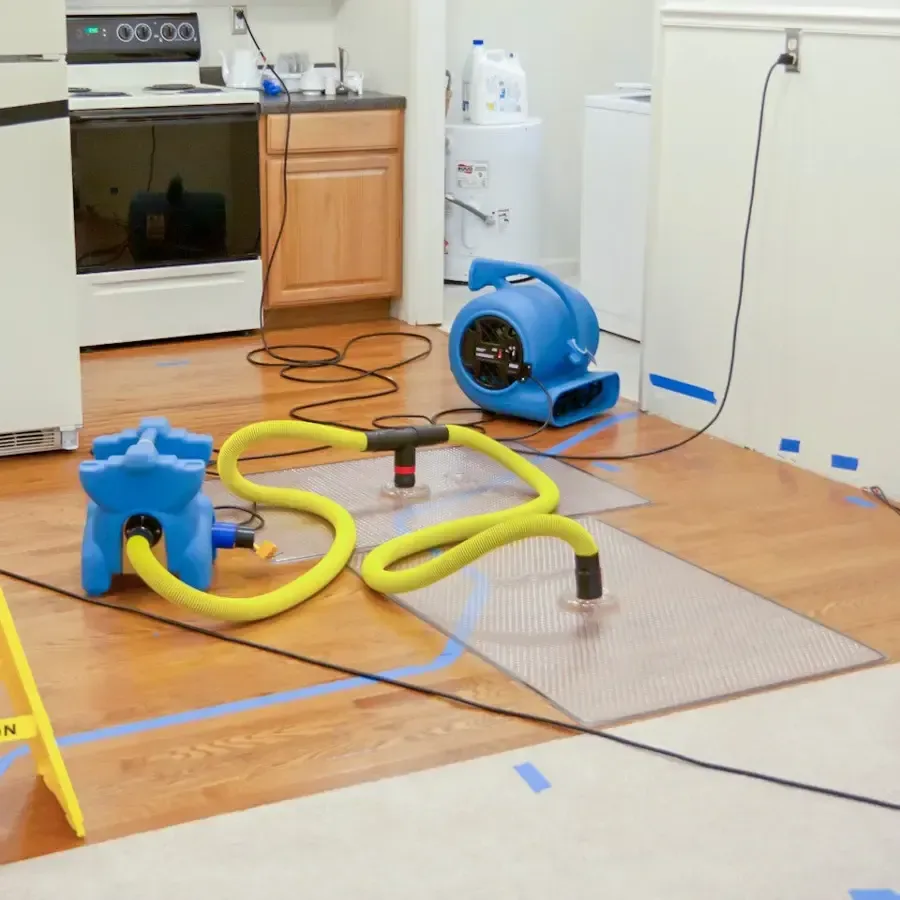
First steps for structural drying and dehumidification in South Lyon
Stop the source
Fix the leak so drying is not working against new water.
Leave equipment on
Keep machines running and doors closed, since stopping early leaves moisture behind.
Expect some noise
Dehumidifiers and fans run around the clock, and the room warms up.
Delay the repairs
Hold off on new drywall and flooring until readings confirm dry.
How a structural drying and dehumidification job is handled
Readings before equipment
The tech who does the walkthrough checks walls, floors and the basement slab with pinless meters and thermal imaging before a single fan is placed.
Dried to IICRC S500
The drying team follows IICRC S500, the industry drying standard, so framing and subfloor get structural drying, not a surface wipe.
A file the adjuster can follow
Moisture maps, daily logs and timestamped photos go into one claim file from the first visit to the last reading.
Built for Michigan winters
Frozen pipes, ice dams, snowmelt seepage and sump pumps that quit in a storm are routine work across Livingston County.
What does structural drying and dehumidification cost in South Lyon, MI?
A room or two usually costs $800 to $2,000 to dry. A whole level or several rooms runs $2,000 to $5,000, and dense Class 4 materials such as hardwood, plaster or concrete reach $5,000 to $10,000 or more because they release water slowly.
A room or two
$800 to $2,000
- A few air movers
- A dehumidifier on site
- Three to four days
A whole level
$2,000 to $5,000
- More dehumidifiers
- Cavity and floor drying
- Four to six days
Dense Class 4 materials
$5,000 to $10,000+
- Desiccant dehumidifiers
- Hardwood, plaster or concrete
- Six days or more
Ranges are typical, not a quote: water category, wet square footage, material class and how fast drying started move the number most. Run the water damage cost calculator for a closer planning range.
The structural drying and dehumidification process, start to dry
Four stops, run in this order, with a reading logged at each one.
- 1
Map the moisture
Meters and a thermal camera mark every wet material and set the goal.
- 2
Set the equipment
Air movers and dehumidifiers are placed by room size and material.
- 3
Read and adjust
Daily readings show progress, and machines are moved to match.
- 4
Confirm dry
Final readings must match the dry reference before equipment leaves.
South Lyon has 2,966 detached single-family homes, 779 attached units, 197 units built in 1939 or earlier and 1,661 built in the 1990s, so no two drying plans match. A plan for plaster and hardwood differs from one for drywall and laminate, and the crew chooses by what is actually wet, not by the age of the building alone.
How the equipment is chosen
Air movers push dry air across surfaces, while dehumidifiers pull moisture out of the air so it does not settle elsewhere. Desiccant units handle dense materials like hardwood and plaster, and the mix changes as readings fall. Sealing the drying zone keeps the machines working on the wet area instead of the whole house.
What gets measured
- Moisture content in framing, subfloor and trim
- Temperature and humidity in each drying zone
- Surface readings on drywall and cabinets
- A dry reference reading from an unaffected room
Hardwood floors and plaster walls hold water longer than drywall, so they get desiccant units and drying mats rather than extra fans alone. Cabinets are drilled or their toe kicks removed so air reaches the hidden cavity. The crew also watches air temperature, since cold rooms dry slowly and warm, dry air pulls moisture out faster.
Why daily visits matter
Readings change every day, so equipment is moved, added or removed to match. A fan that has finished its job is taken away, and a spot that stalls gets targeted drying. See water extraction for the stage before drying and commercial water damage for larger buildings.
Structural Drying and Dehumidification across the surrounding area
Drying work covers the whole city, from Downtown South Lyon and the Pontiac Trail and Lafayette Street corridor to the neighborhoods near Volunteer Park, McHattie Park and Paul Baker Memorial Park, in ZIP code 48178.
The same service nearby: structural drying and dehumidification in Howell, Brighton, Milford. Every water service for this town · every town covered
Related water damage services nearby
Structural Drying and Dehumidification questions in South Lyon, MI
How many days does drying usually run?
Usually three to six days, though dense materials like hardwood and plaster can take longer. Daily readings decide the finish, not a fixed schedule.
Why does the equipment run all day?
Moisture only leaves when air keeps moving and humidity stays low. Stopping early lets water stored in framing and subfloors return to the surface.
Can wet drywall be dried in place?
Sometimes, when the water was clean and it is caught early. Drywall that stayed wet, sagged or softened is usually cut out so the cavity can dry.
Will drying raise the electric bill?
Yes, a little, since several machines run continuously. The cost is small next to rebuilding a floor or wall that mold or rot has reached.
Is hardwood worth trying to dry?
Often, with drying mats and a desiccant unit, especially when caught early. Boards that have buckled badly may still need replacement.
Does insurance cover drying?
Drying after a covered loss is normally part of the claim. The crew's daily readings show the adjuster why the equipment stayed as long as it did.
Finish the job with proper drying
One call places air movers and dehumidifiers, with daily readings that prove the structure is dry for the insurance file and the adjuster.