Structural Drying and Dehumidification in Milford
Wet framing, floors and walls keep holding water long after the surface feels dry. Crews set air movers and dehumidifiers to the building, then check readings daily until every material reaches its target.
(888) 612-9219Plan the drying for your building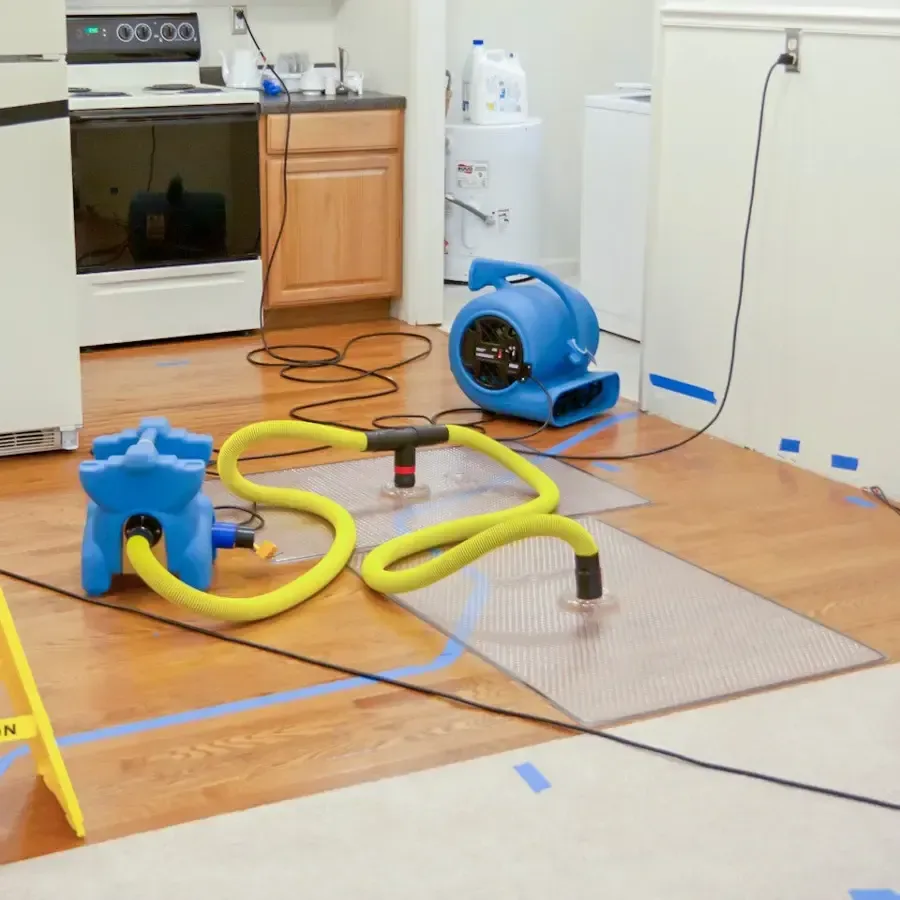
First steps for structural drying and dehumidification in Milford
Keep equipment running
Do not switch it off to save noise or power until readings say dry.
Close doors and windows
Closed spaces dry faster than open ones.
Leave the cavity openings
Small holes in walls let air reach wet framing.
Keep the heat steady
Warm, steady air helps materials release water.
How a structural drying and dehumidification job is handled
Readings before equipment
The tech who does the walkthrough checks walls, floors and the basement slab with pinless meters and thermal imaging before a single fan is placed.
Dried to IICRC S500
The drying team follows IICRC S500, the industry drying standard, so framing and subfloor get structural drying, not a surface wipe.
A file the adjuster can follow
Moisture maps, daily logs and timestamped photos go into one claim file from the first visit to the last reading.
Built for Michigan winters
Frozen pipes, ice dams, snowmelt seepage and sump pumps that quit in a storm are routine work across Livingston County.
What does structural drying and dehumidification cost in Milford, MI?
Drying cost depends on the number of rooms, the materials and the days of equipment. Standard drywall and carpet dry quickly, while hardwood, plaster and concrete need longer runs and sometimes desiccant units, which raises the equipment charge and the overall total.
One or two rooms
$800 to $2,000
- A few air movers and a dehumidifier
- Daily readings
- Short equipment period
Lower level or several rooms
$2,000 to $5,000
- Multiple dehumidifiers
- Cavity and floor drying
- Several days of drying
Class 4 materials
$5,000 to $10,000+
- Desiccant dehumidifiers
- Hardwood, plaster or concrete
- Extended equipment run
Ranges are typical, not a quote: water category, wet square footage, material class and how fast drying started move the number most. Run the water damage cost calculator for a closer planning range.
The structural drying and dehumidification process, start to dry
Four stops, run in this order, with a reading logged at each one.
- 1
Map the moisture
Meters and a thermal camera mark every wet material.
- 2
Set the equipment
Air movers and dehumidifiers are sized to the room and the materials.
- 3
Check every day
Readings direct adjustments and moves.
- 4
Release the building
Equipment leaves when readings match dry references.
Drying is a measured process, not a guess. The village has 1,885 detached single-family homes, about 477 units built in 1939 or earlier and about 440 built in the 1950s, so plans follow the building's age and layout as well as the water that entered. Wet materials rarely give up water at the same pace, so one reading in one spot is never enough.
What controls drying time
- The material, since drywall dries faster than hardwood or plaster
- How long the water sat before drying began
- Room temperature and humidity
- Airflow across wet surfaces
- Whether the wall has insulation or other layers
- Layers such as flooring over subfloor that slow the release
How crews dry a building
Air movers push dry air across surfaces while dehumidifiers pull moisture out of the air, which keeps humidity low enough for materials to release water. Cavities behind walls and under floors get their own airflow, and dense materials may need desiccant units. Containment is used when needed, such as a plastic barrier around the wet zone, so conditioning air does not spread moisture to dry rooms.
Readings are taken every day from the same spots. If a reading stalls, the crew moves equipment, adds airflow or opens a cavity that was holding water. Equipment leaves only after readings match unaffected materials.
Related work
Drying follows water extraction in most jobs and supports every other service, including basement flooding cleanup. Older homes with layered finishes may need extra checks. Moisture meters and thermal imaging are used before and during the job, not only at the end.
Structural Drying and Dehumidification across the surrounding area
Drying work covers houses, apartments and shops across the village, including Downtown Milford, the Central Park area, the Southside district, the Water Street area and the Oakland Street area, in ZIP codes 48381 and 48380.
The same service nearby: structural drying and dehumidification in Howell, South Lyon, Brighton. Every water service for this town · every town covered
Related water damage services nearby
Structural Drying and Dehumidification questions in Milford, MI
How long does structural drying take?
Most jobs need several days, with denser materials taking longer. Daily readings, not a calendar, decide when equipment leaves.
Why do dehumidifiers run so long?
Materials release water slowly, and the dehumidifier must keep the air dry enough to pull it out. Stopping early leaves hidden moisture behind.
Is it normal for the house to feel warm?
Yes. Equipment adds heat and the dry air speeds evaporation. It is part of the process and ends when the job does.
Can I use my own fans instead?
Household fans move air but do not remove moisture or measure progress. Professional air movers and dehumidifiers work as a controlled system.
What are Class 1 through 4 water losses?
Classes describe how much and how deeply materials absorbed water, from small areas up to dense materials like hardwood and plaster that hold moisture.
How do I know the job is done?
The crew compares readings from wet areas with readings from unaffected materials in the same building and shows the final logs.
Dry to the touch is not dry
Hidden moisture in framing and floors is what causes repeat damage. Call, and the crew will plan the equipment and the daily readings for your claim file.