Water Extraction and Removal in Milford
Standing water soaks deeper into pad, wall bases and subfloors the longer it sits. Crews pump and extract it quickly, then measure what remains so drying targets the layers that are still wet.
(888) 612-9219Clear the floor of water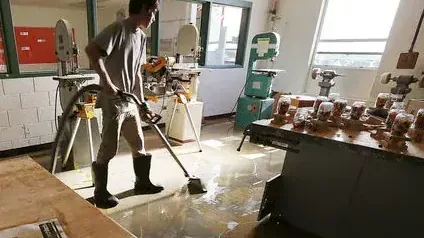
First steps for water extraction and removal in Milford
Stop the water
Close the valve or shutoff if you can reach it safely.
Skip the vacuum
A household vacuum is not made for water and can shock you.
Lift the small things
Get rugs, boxes and electronics onto dry surfaces.
Take photos first
Capture the high-water mark before anything is moved.
How a water extraction and removal job is handled
Readings before equipment
The tech who does the walkthrough checks walls, floors and the basement slab with pinless meters and thermal imaging before a single fan is placed.
Dried to IICRC S500
The drying team follows IICRC S500, the industry drying standard, so framing and subfloor get structural drying, not a surface wipe.
A file the adjuster can follow
Moisture maps, daily logs and timestamped photos go into one claim file from the first visit to the last reading.
Built for Michigan winters
Frozen pipes, ice dams, snowmelt seepage and sump pumps that quit in a storm are routine work across Livingston County.
What does water extraction and removal cost in Milford, MI?
Cost depends on how much water, how many rooms and whether the water is clean. A single wet room is the least expensive, and the figure rises when pad must be pulled or drying runs on for several days.
One room, clean water
$300 to $900
- A single room or hallway
- Portable extraction unit
- Carpet lifted and floated
Several rooms or a lower level
$900 to $2,500
- Truck-mounted extraction
- Wet pad pulled and bagged
- Pump for deeper water
Extraction plus full drying
$1,200 to $5,000
- Removal and structural drying
- Dehumidifiers and air movers
- Daily readings kept for the claim
Ranges are typical, not a quote: water category, wet square footage, material class and how fast drying started move the number most. Run the water damage cost calculator for a closer planning range.
The water extraction and removal process, start to dry
Four stops, run in this order, with a reading logged at each one.
- 1
Assess the scene
The crew finds the source, checks safety and maps wet areas with a thermal camera and meters.
- 2
Extract the water
Truck-mounted and portable units pull standing water from floors, carpet and low areas.
- 3
Remove soaked materials
Saturated pad and wet insulation are cut out and bagged so they stop feeding moisture to the structure.
- 4
Hand off to drying
Equipment is placed for structural drying, and readings are logged each day for the claim.
Extraction is the first real step after a leak or storm, and it is time sensitive. Quick action matters because wet pad and baseboard start to swell and stain as the hours pass. Buildings here range from houses built in 1939 or earlier to newer construction, plus downtown shops and restaurants, so crews begin by finding the source and checking how far the water traveled before any pump is set.
What extraction removes
- Standing water on hard floors and concrete
- Water held in carpet and cushion that can be floated or lifted
- Pooled water in low corners, closets and utility spaces
- Moisture wicking up wall bases, which is measured before it is dried
- Water trapped under cabinets and floating floors
Why extraction comes before drying
Pulling water out mechanically is far faster than evaporating it. A truck-mounted unit lifts gallons that dehumidifiers would need days to handle, which shortens the whole job and cuts the odds of swollen trim and stained subfloors.
Extraction also reveals what is truly wet. Once the standing water is gone, a thermal camera and moisture meters mark the wet zones, and the crew decides which materials can dry in place and which must come out. A thorough pass also covers room edges, closets and door thresholds, where water pools and hides.
When the water is not clean
If the source is a drain, a toilet or flood water from outside, the job changes. Porous materials come out and surfaces are cleaned and treated, as covered under sewage backup cleanup. Gray water from a washer or dishwasher also changes the plan, since soap and light contamination mean carpet and pad usually need replacement rather than drying. Afterward, structural drying finishes the work.
Water Extraction and Removal across the surrounding area
Extraction crews work across the village, from downtown Milford and the Central Park area to the Southside district, the Huron Street area, the Water Street area and the Oakland Street area, in ZIP codes 48381 and 48380.
The same service nearby: water extraction and removal in Howell, South Lyon, Brighton. Every water service for this town · every town covered
Related water damage services nearby
Water Extraction and Removal questions in Milford, MI
How quickly should extraction start?
Sooner is better because water wicks into pad, drywall and trim as it sits. Call as soon as it is safe, and crews will start pumping and mapping.
Can I use a wet vac?
A small shop vacuum can help with a thin spill, but it cannot match a truck-mounted unit and it will not find water inside walls. Never use a household vacuum.
Is carpet saved or replaced?
Clean-water carpet can often be floated and dried if the pad is handled promptly. Contaminated water means carpet and pad come out.
Does extraction include drying?
They are separate steps. Extraction removes the liquid, and structural drying removes moisture held in materials, so most jobs include both.
What if the water came from a drain?
Treat it as contaminated. Stay out of the area and let a crew contain it, remove porous materials and clean and treat the surfaces.
Will crews find hidden water?
Yes. Thermal imaging and moisture meters show water behind baseboards and under flooring that looks dry, which is checked before drying equipment is placed.
Standing water does not dry itself
Extraction starts the recovery and drying finishes it. Call, and the crew will plan the pumps, the removal and the readings for the claim.