Water Extraction in Brighton, MI
Standing water soaks into carpet, pad and wall bases quickly, so extraction comes first, as soon as the source is found and stopped. Truck-mounted units clear a flooded floor, then drying equipment takes over the damp materials left behind.
(888) 612-9219Drain the soaked floors and rooms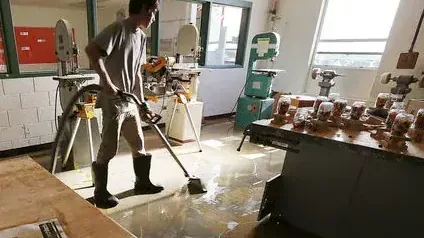
First steps for water extraction and removal in Brighton
Stop the source
Close the supply valve or isolate the leaking appliance before anything else.
Lift small items
Move rugs, boxes and electronics off wet floors so they stay dry.
Avoid wet outlets
Keep clear of wet outlets and cords, and switch off room power only from a dry spot.
Take photos
Photograph the wet areas and damaged items before anything is moved.
How a water extraction and removal job is handled
Readings before equipment
The tech who does the walkthrough checks walls, floors and the basement slab with pinless meters and thermal imaging before a single fan is placed.
Dried to IICRC S500
The drying team follows IICRC S500, the industry drying standard, so framing and subfloor get structural drying, not a surface wipe.
A file the adjuster can follow
Moisture maps, daily logs and timestamped photos go into one claim file from the first visit to the last reading.
Built for Michigan winters
Frozen pipes, ice dams, snowmelt seepage and sump pumps that quit in a storm are routine work across Livingston County.
What does water extraction and removal cost in Brighton, MI?
Extraction alone runs about $300 to $900 for a small clean-water area and $900 to $2,500 for several rooms or a lower level. Adding full drying after the pump-out brings the range to $1,200 to $5,000. Depth, materials and water category set the final figure.
Small clean-water area
$300 to $900
- One room or a hallway
- Portable or truck unit
- Carpet floated if possible
Several rooms or a lower level
$900 to $2,500
- Truck-mounted pump-out
- Wet pad pulled and bagged
- Submersible pump as needed
Pump-out plus full drying
$1,200 to $5,000
- Extraction and removal
- Air movers and dehumidifiers
- Daily readings for the claim
Ranges are typical, not a quote: water category, wet square footage, material class and how fast drying started move the number most. Run the water damage cost calculator for a closer planning range.
The water extraction and removal process, start to dry
Four stops, run in this order, with a reading logged at each one.
- 1
Find the source
Technicians trace where the water began and confirm it has stopped before any equipment is set.
- 2
Extract and drain
Pumps and extractors pull standing water, then wands work the carpet and hard floors.
- 3
Remove what cannot dry
Soaked pad and ruined base materials are cut out, bagged and carried outside.
- 4
Dry and verify
Air movers and dehumidifiers run until readings match the dry standard from an unaffected area.
Extraction is the first hands-on step on most water losses in Brighton, and it works best once the source is closed off. A cracked supply pipe, a failed hose, a roof leak and a sewer backup all leave water on a floor, yet each calls for a different plan afterward. Housing here runs from 252 units built in 1939 or earlier to newer construction, and downtown has businesses too, so crews study the building before choosing equipment.
Equipment that fits the floor
- Truck-mounted units pull the most water from large open floors.
- Portable extractors reach stairs, closets and tight rooms.
- Submersible pumps take the deeper standing water first.
- Carpet is floated or lifted when the pad is soaked through.
- Moisture meters show what still holds water after the pass.
What happens after the pump-out
Pulling the standing water does not make a room dry. Padding, tack strips, baseboards and the bottom of drywall keep moisture long after the surface looks fine, so technicians map the damp areas with meters and a thermal imaging camera. Material that cannot be saved, such as soaked pad, is cut out and bagged. Everything else moves into structural drying with air movers and dehumidifiers.
Clean water from a broken supply pipe is handled differently from gray or black water, and that sorting decides what can stay. Insurers usually ask to see it documented, so readings and photos are taken at every visit.
Call before the water travels
Water moves along floors and into wall bases quickly, and an early call limits how far it goes. Anyone in a multi-unit building should also warn the neighbors below, since the water may already be reaching them.
Water Extraction and Removal across the surrounding area
Crews work across the city, from the Mill Pond and Old Town Hall areas to Fairway Trails, Glenwyth, Sisu Knoll and Grand River Avenue, in ZIP codes 48116 and 48114. Homes just outside city limits with a Brighton mailing address are served too.
The same service nearby: water extraction and removal in Howell, South Lyon, Milford. Every water service for this town · every town covered
Related water damage services nearby
Water Extraction and Removal questions in Brighton, MI
What does water extraction involve?
Technicians stop the source, pull standing water with pumps or extractors, remove soaked pad where needed, then set up drying equipment and track moisture readings.
Is extraction enough without drying?
No. Surface water is only part of it. Moisture left in pad, wall bases and subfloors keeps spreading and can cause swelling and odors, so drying follows.
Can the carpet be saved?
Often yes when the water is clean and caught early. The pad usually goes, while the carpet is floated and dried. Gray or black water changes that.
Do I need to move furniture first?
Lift small items and electronics, but leave heavy furniture to the crew. Blocks or foil tabs go under legs so wood and fabric stay out of the water.
Does extraction work in an apartment or condo?
Yes. Multi-unit buildings add steps, like checking the unit below and telling the manager, since water can travel through floors and shared walls.
What should I photograph?
Wet floors, damaged belongings, the source of the leak and any meter readings. Insurers like clear photos taken before anything is moved or thrown away.
What if the water is from a sewer backup?
That is Category 3 and needs containment, protective gear and disposal of porous items. Read about sewage backup cleanup before touching anything.
Pump out the water, then dry the rest
One call starts extraction, moisture mapping and the drying plan, and the crew explains each step and keeps the records an adjuster will ask for.