Sewage coming up through a floor drain, tub or toilet raises two questions at once: who fixes the pipe, and what happens to the damage. The city publishes answers to both, and the order of the first few calls matters.
Key takeaways
- The city wants the first phone call after a sewer backup, ahead of any private plumber.
- The Department of Public Works inspects the public mains at no charge, and the city splits responsibility by where the cause sits: the public main is the city's, the pipe serving the property is the owner's.
- An ordinance extends the owner's responsibility along the whole service pipe, from the building out to the main.
- Anyone claiming backflow damage has 45 days from discovery to put the claim in writing and deliver it to the City Clerk, and Michigan Public Act 222 of 2001 holds a matching 45 day window.
- Sewage is Category 3 water: porous materials it touched are removed, and cleanup does not wait for the cause to be sorted out.
Call the city first when sewage backs up
Fenton's city government asks for the first phone call after a sewer backup, ahead of any private plumber. The Department of Public Works will inspect the public mains without billing the resident.
The order has a practical purpose. If the public main is the problem, the city needs to know right away, and its inspection can show where the blockage sits.
If a homeowner pays a private plumber to clear a blockage before the city has been told, the city generally will not repay that bill. Its system also includes 7 sewer lift stations alongside the mains.
- Stop running water in the house: no sinks, showers, washers or flushing.
- Phone the city before a private plumber.
- Photograph the backup and the water level before anything is moved.
- Keep children and pets out of the affected rooms.
Protecting the home while the city checks
Waiting for the city check is not a reason to leave sewage standing. The water keeps soaking into floors and walls, and the longer it sits the more has to be removed.
A few steps limit the spread without touching the contaminated area.
- Close doors to rooms the water has not reached.
- Turn off the power to a wet room only from a dry spot.
- Move belongings from dry rooms away from the wet edge.
- Do not wipe, rinse or reuse anything the sewage touched.
Why a backup happens in the first place
Backups have a short list of common causes, in any city. Grease, wipes and roots can block a service pipe, and a sagging or cracked pipe can do the same.
A main can clog in the same ways. That is why the first question is where the blockage sits, since the answer decides which side of the split the repair belongs to.
Main or service pipe: how the city splits responsibility
The city divides responsibility by the location of the cause. A blockage or failure in the public main falls to the city, while one in the pipe that serves the property falls to the owner.
An ordinance extends the owner's responsibility along the whole service pipe, from the building out to the main. The main runs under the street, and the service pipe is the stretch that ties the building to it.
That is the city's own description of the split. It is not legal advice, and the cause of a particular backup is a finding for the city and its crews, not for a restoration company.
- Public sewer main: the city's side of the split.
- Service pipe from the building to the main: the owner's side.
The 45 day written notice
Anyone claiming backflow damage has 45 days from discovery to put the claim in writing and deliver it to the City Clerk. The clock starts when the backup or overflow was found.
A state law, Michigan Public Act 222 of 2001, holds the same 45 day window for claims against a government agency over sewer backup damage. It counts from when the damage was or should have been discovered.
Both rules set a deadline for notice. Neither is a promise of payment, and neither replaces advice from a lawyer.
A notice is easier to write from a record
Questions about what a notice must contain go to the City Clerk or a lawyer. A record kept from the first day makes any letter easier to write.
- The date and time the backup was discovered.
- The address of the property.
- A description of the damage and the rooms affected.
- Photos and a list of the damaged items.
What the cleanup removes after sewage
Sewage is Category 3 water, the most contaminated class. The work follows the same pattern whether the cause was the main or the service pipe.
Crews wear gloves, boots and respirators for this work, and the wet area is kept separate from the rest of the home while it is open.
Materials that are removed
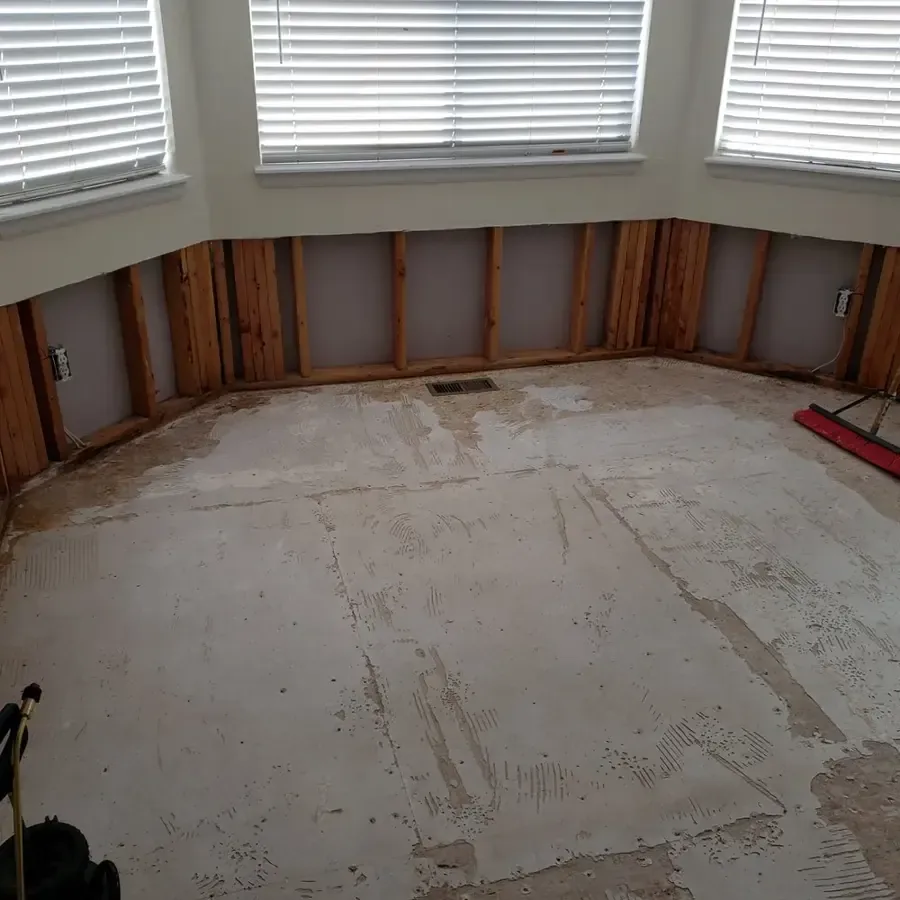
Standing water goes first, through water extraction. Porous materials the sewage touched cannot be made safe by drying.
- Carpet and pad.
- Drywall and insulation the water reached.
- Cabinet bases and particleboard that soaked.
- Soaked cardboard, fabric and stored goods.
Surfaces that are sanitized and dried
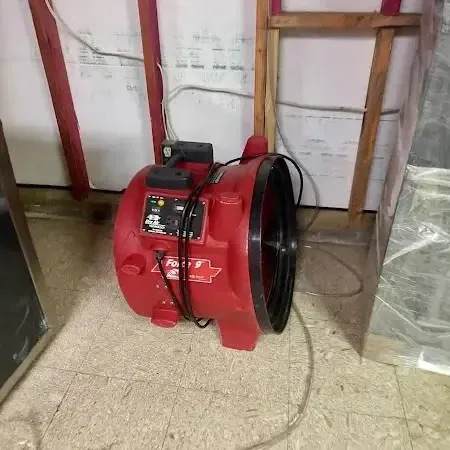
Framing, concrete and other solid surfaces are scrubbed, sanitized and dried, and readings confirm that each area has reached the dry goal.
A sewage backup cleanup can begin while the city inspects the main. Photos taken first keep the record intact.
What not to do after a backup
A few quick fixes make the damage worse or put people at risk.
- Do not pour chemical drain cleaner into a backed up drain.
- Do not use a household vacuum on sewage water.
- Do not walk through the wet area barefoot or let children play in it.
- Do not throw out damaged items before they are photographed.
Renters, landlords and city limits
The city has 1,920 renter occupied homes among its 5,208 occupied homes, so many backups involve a tenant and a landlord at the same time.
A renter tells the landlord in writing right away, with photos. The renter and the landlord agree early on who contacts the city, because the notice deadline keeps running from the day the damage was found.
City address or township address
The city is administratively separate from Fenton Charter Township, which has its own offices, its own water and sewer department and its own rules.
The ZIP code 48430 also covers the township offices, so a mailing address with that ZIP code is not always inside the city. The rules above apply to the city.
The wider water damage restoration steps are the same either way.
Questions
Should a plumber or the city be called first for a sewer backup?
The city asks for the first call. Its Department of Public Works inspects the public mains at no charge.
Does the city pay for damage from a backup?
The city treats a failure in the public main as its own responsibility and one in the service pipe as the owner's. A claim needs written notice within 45 days, and neither rule promises payment.
What is the 45 day deadline?
It is the window for written notice that the city and Michigan Public Act 222 of 2001 both describe, counted from when the damage was discovered or should have been.
Can the cleanup start before the cause is known?
Yes. Sewage should not sit in a home, so extraction and removal can begin while the city inspects the main.
Does a mailing address mean the city rules apply?
Not always. The 48430 ZIP code also covers the township offices, and the township has its own sewer rules.
How is sewage cleanup different from a clean water leak?
Sewage carries bacteria, so porous materials it touched are removed and solid surfaces are sanitized. A clean water leak is mostly extracted and dried.