Water Extraction and Removal in Fenton
Standing water in a house, an apartment or a shop soaks into pad, trim and framing quickly. Truck-mounted and portable extractors pull it out first, then moisture mapping shows what else is wet.
(888) 612-9219Get standing water pumped out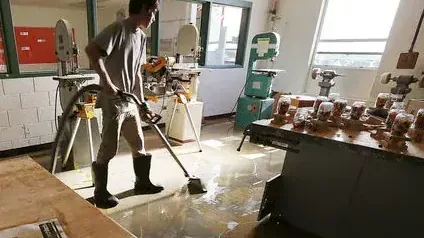
First steps for water extraction and removal in Fenton
Stop the source
Close the supply valve or switch off the appliance that is feeding the water.
Clear the floor
Lift small items and loose rugs so extractors can reach the whole area.
Skip the household vacuum
A standard vacuum is not built for standing water, and wet cords near outlets are a shock risk.
Take photos
Photograph the water level and the damaged items before extraction begins.
How a water extraction and removal job is handled
Readings before equipment
The tech who does the walkthrough checks walls, floors and the basement slab with pinless meters and thermal imaging before a single fan is placed.
Dried to IICRC S500
The drying team follows IICRC S500, the industry drying standard, so framing and subfloor get structural drying, not a surface wipe.
A file the adjuster can follow
Moisture maps, daily logs and timestamped photos go into one claim file from the first visit to the last reading.
Built for Michigan winters
Frozen pipes, ice dams, snowmelt seepage and sump pumps that quit in a storm are routine work across Livingston County.
What does water extraction and removal cost in Fenton, MI?
Extraction alone usually runs $300 to $900 for a small area and $900 to $2,500 for a lower level or several rooms, and the total reaches $1,200 to $5,000 once full drying is included in the scope.
Small area
$300 to $900
- A single room or hall
- One extractor, a short visit
- Carpet lifted and floated
Lower level or several rooms
$900 to $2,500
- Truck-mounted extraction
- Pad pulled and bagged
- Pump placed for deep water
With full drying
$1,200 to $5,000
- Extraction plus removal
- Air movers and dehumidifiers
- Daily readings for the file
Ranges are typical, not a quote: water category, wet square footage, material class and how fast drying started move the number most. Run the water damage cost calculator for a closer planning range.
The water extraction and removal process, start to dry
Four stops, run in this order, with a reading logged at each one.
- 1
Assess the water
The crew checks the source, depth and category of the water, then walks the structure with meters to see where it traveled.
- 2
Extract and drain
Truck-mounted or portable units remove standing water, and a submersible pump handles anything deep.
- 3
Remove what cannot dry
Saturated pad and loose materials are bagged so they stop feeding moisture back into the room.
- 4
Hand off to drying
Equipment is set, readings are logged, and the job moves into drying with a goal for each material.
Homes in the city range from houses built in 1939 or earlier to homes built in the 2000s, so no two extraction jobs start the same way. A pump-out in an older house and a spill in a shop call for different tools, but the first move never changes: find the source of the water and stop it, then remove what is standing.
What the first visit covers
- Shutting off or isolating the source when nobody has yet
- Truck-mounted units for large areas and portable units for stairs and upper floors
- Submersible pumps when the water is deep
- Carpet floated and lifted where it can be saved, with the pad pulled and bagged
- Moisture mapping with meters and a thermal camera before drying equipment is placed
Why a dry-looking floor can still be wet
Water travels along framing, under trim and into the floor assembly, so a floor that looks nearly dry on top can still hold moisture beneath it. Hard surfaces clear quickly, while carpet and pad take more work and more patience. Pulling the water out early also keeps odors and bacterial growth from getting started.
The crew notes what was wet at the start, because those first readings shape both the drying plan in structural drying and the claim that follows.
Extraction work in Fenton buildings
Houses, apartment complexes and the shops of Silver Lake Village hold water in different ways. In a multi-unit building, extraction also means checking the ceiling below and the neighbor's wall, because water rarely stays in one unit. Washer, dishwasher and tub overflows are common sources in those buildings.
Water Extraction and Removal across the surrounding area
Extraction crews cover downtown and the Leroy Street core beside the Shiawassee River, the Appletree subdivision, the Mill Pond Park area and the Silver Lake Village shopping district, in ZIP code 48430.
The same service nearby: water extraction and removal in Howell, Holly, Milford. Every water service for this town · every town covered
Related water damage services nearby
Water Extraction and Removal questions in Fenton, MI
How soon does extraction need to start?
Water keeps moving into pad, trim and framing while it sits, so earlier extraction saves more flooring and shortens the drying that follows.
Can wet carpet be saved?
Often yes when the water is clean and the carpet is lifted and floated quickly. The pad usually cannot be saved and is removed and bagged.
Do truck-mounted units reach upstairs?
Truck-mounted units serve ground-level areas through long hoses, while portable extractors are carried to stairs and upper floors.
What if the water came from a drain?
Backed-up drain water is handled as contaminated, with removal under containment. The sewage backup page covers the steps and the city's call-first rule.
Is extraction the same as drying?
No. Extraction removes standing water, while structural drying pulls moisture out of materials with air movers and dehumidifiers over several days.
Does an apartment need anything extra?
Yes. The crew checks the ceiling below and the shared walls beside the unit, and photographs each affected unit for the property manager and the insurers.
What belongs in the photos?
The water level on the walls, the source, damaged contents and any stained ceilings, taken before and after extraction for the claim file.
Get the water out before it settles in
A call sets up extraction, moisture mapping and the drying plan, with photos and readings kept for the claim from the first visit.