Structural Drying and Dehumidification in Fenton
Water that has soaked into framing, floors and walls has to be pulled out slowly and measured. Air movers, dehumidifiers and daily readings take each material back to dry before anything is closed up.
(888) 612-9219Get drying equipment running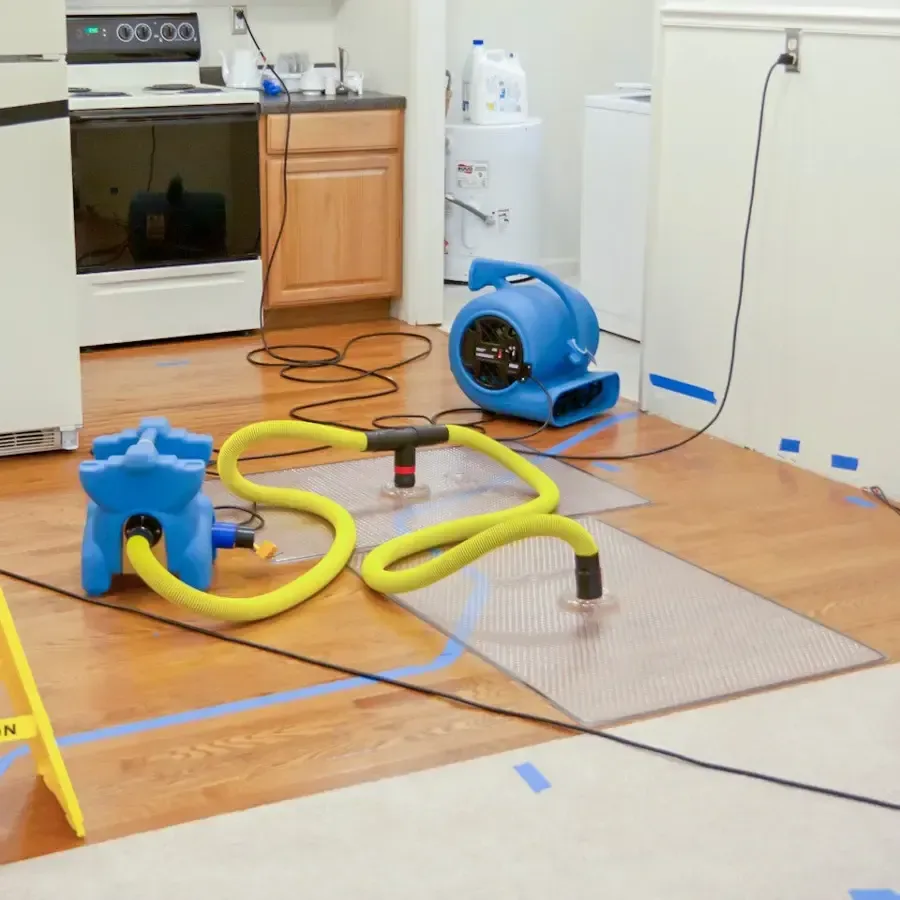
First steps for structural drying and dehumidification in Fenton
Keep the doors closed
Closed doors and windows let dehumidifiers work on a smaller volume of air.
Leave the equipment alone
Moving or unplugging it changes the airflow the plan depends on.
Run the air conditioning
Cooling helps the dehumidifiers work.
Write down the dates
Note when equipment started, for the claim and for the electric bill.
How a structural drying and dehumidification job is handled
Readings before equipment
The tech who does the walkthrough checks walls, floors and the basement slab with pinless meters and thermal imaging before a single fan is placed.
Dried to IICRC S500
The drying team follows IICRC S500, the industry drying standard, so framing and subfloor get structural drying, not a surface wipe.
A file the adjuster can follow
Moisture maps, daily logs and timestamped photos go into one claim file from the first visit to the last reading.
Built for Michigan winters
Frozen pipes, ice dams, snowmelt seepage and sump pumps that quit in a storm are routine work across Livingston County.
What does structural drying and dehumidification cost in Fenton, MI?
Drying one or two rooms costs $800 to $2,000, a lower level or several rooms runs $2,000 to $5,000, and Class 4 materials such as hardwood, plaster and concrete reach $5,000 to $10,000 or more.
One or two rooms
$800 to $2,000
- A few air movers
- A dehumidifier
- Three to four days
Lower level or several rooms
$2,000 to $5,000
- Multiple dehumidifiers
- Cavity and floor drying
- Four to six days
Class 4 materials
$5,000 to $10,000+
- Desiccant dehumidifiers
- Hardwood, plaster, concrete
- Six days or more
Ranges are typical, not a quote: water category, wet square footage, material class and how fast drying started move the number most. Run the water damage cost calculator for a closer planning range.
The structural drying and dehumidification process, start to dry
Four stops, run in this order, with a reading logged at each one.
- 1
Set the plan
The crew classifies the water, picks equipment and sets a dry goal for each material.
- 2
Place the equipment
Air movers and dehumidifiers go where the meters show moisture.
- 3
Visit and adjust
Each day the crew reads the meters and moves the equipment.
- 4
Confirm dry
Equipment comes out once every reading reaches its target.
The city has 3,233 detached single-family homes, 745 housing units built in 1939 or earlier and 816 built in the 1950s, so a drying plan follows each building's age and layout rather than one fixed method. Plaster, old hardwood and newer drywall each dry at their own pace.
What a drying plan sets up
- Air movers aimed along walls and across floors
- LGR dehumidifiers for most rooms, desiccant units for dense materials
- Drying mats on hardwood and openings in wall cavities
- Containment to keep the wet zone separate from dry rooms
- A daily visit to read the meters and move the equipment
Why readings decide when it ends
A material that feels dry can still hold water, so the crew compares each reading with a dry reference from the same building. Equipment is moved or removed as materials reach their target, and drying stops only when every reading agrees. Jobs that begin with sewage follow the sewage backup page first.
That log also shows an insurer exactly how many days of equipment the job needed, which supports the estimate. For the first step of any wet job, see water extraction.
Drying older and newer homes in Fenton
Plaster walls and old hardwood hold water longer, while newer drywall and carpet dry faster but can be ruined sooner. The plan sets different goals for each, so the whole house reaches dry together. A drying plan for a house from the 1950s and one for a home built in the 2000s are not the same, so the crew reads more points before choosing equipment.
Structural Drying and Dehumidification across the surrounding area
Drying crews work in houses, condominiums and apartments across the city, from older streets near downtown to Appletree, the Mill Pond Park area and the Silver Lake Village district, in ZIP code 48430.
The same service nearby: structural drying and dehumidification in Howell, Holly, Milford. Every water service for this town · every town covered
Related water damage services nearby
Structural Drying and Dehumidification questions in Fenton, MI
How long does structural drying take?
That depends on the materials and the water, and the daily readings decide the end, not a fixed number of days.
Why are so many fans and dehumidifiers needed?
Air movers push moisture off surfaces while dehumidifiers remove it from the air, and both are needed to pull water out of dense materials.
Can the equipment be turned off at night?
No. Stopping it lets humidity rise and slows the drying, and the job usually takes longer.
What is a Class 4 material?
Dense materials such as hardwood, plaster and concrete that hold water deeply and need slow, specialized drying.
Will the electric bill rise?
Yes. Equipment draws power for several days, and the crew can list the equipment so the insurer sees the load.
Does quick drying protect the walls?
Drying quickly is the best defense against lingering damp, and readings confirm when materials are no longer wet enough to cause trouble.
Dry every wet material, then prove it
The crew sets the equipment, reads the meters each day and keeps the logs that show when the structure is dry.