Structural Drying and Dehumidification in Holly
After the standing water is gone, moisture still hides in framing, subfloors and insulation, so the crew maps it, sets air movers and dehumidifiers and checks readings daily until the structure is dry.
(888) 612-9219Call for meters and drying equipment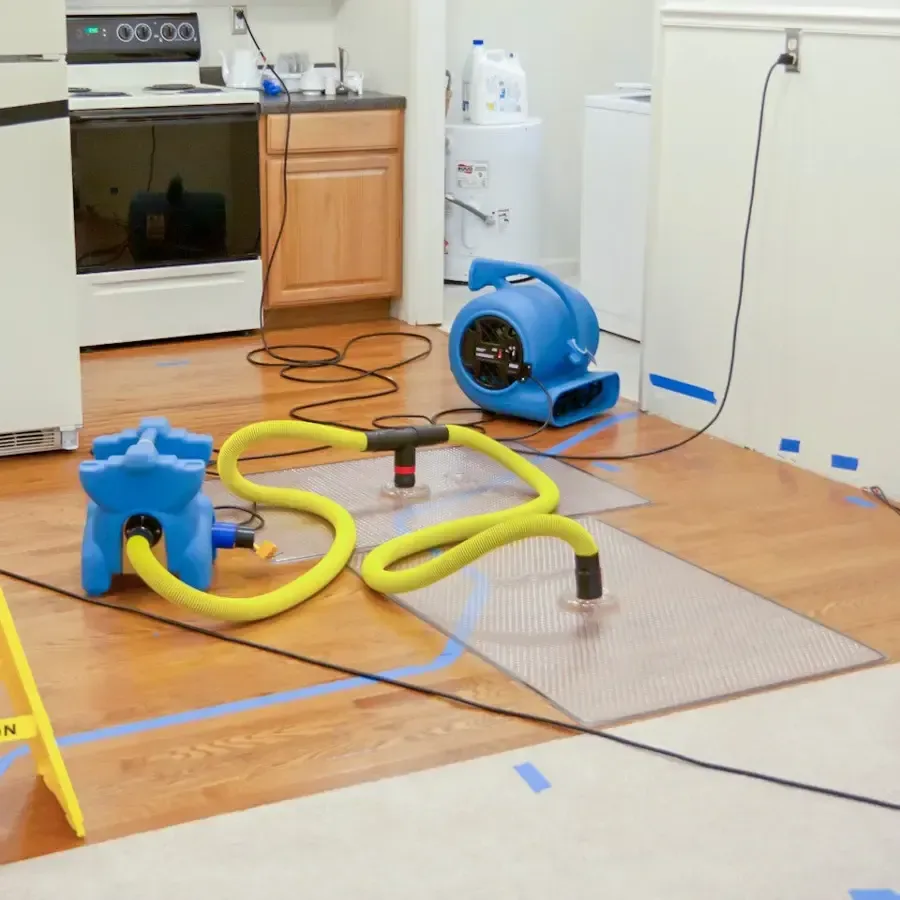
First steps for structural drying and dehumidification in Holly
Keep the air moving
Leave doors between wet rooms open unless containment is set.
Do not crank the heat
Turning the thermostat up can push moisture deeper.
Pull up the rugs
Lift small rugs and furniture so floors can release moisture.
Keep a drying log
Note the date and room if anything changes.
How a structural drying and dehumidification job is handled
Readings before equipment
The tech who does the walkthrough checks walls, floors and the basement slab with pinless meters and thermal imaging before a single fan is placed.
Dried to IICRC S500
The drying team follows IICRC S500, the industry drying standard, so framing and subfloor get structural drying, not a surface wipe.
A file the adjuster can follow
Moisture maps, daily logs and timestamped photos go into one claim file from the first visit to the last reading.
Built for Michigan winters
Frozen pipes, ice dams, snowmelt seepage and sump pumps that quit in a storm are routine work across Livingston County.
What does structural drying and dehumidification cost in Holly, MI?
Expect $800 to $2,000 to dry one or two rooms and $2,000 to $5,000 for a lower level or several rooms. Dense Class 4 materials such as hardwood, plaster or concrete can take a job from $5,000 to $10,000 or more.
One or two rooms
$800 to $2,000
- Several air movers
- A single dehumidifier
- Readings every day
Several rooms
$2,000 to $5,000
- Extra dehumidifiers
- Cavities and floors dried
- Under a week of drying
Class 4 materials
$5,000 to $10,000+
- Desiccant units on site
- Hardwood, plaster, concrete
- Six days or longer
Ranges are typical, not a quote: water category, wet square footage, material class and how fast drying started move the number most. Run the water damage cost calculator for a closer planning range.
The structural drying and dehumidification process, start to dry
Four stops, run in this order, with a reading logged at each one.
- 1
Map the moisture
Meters and a thermal camera show how far the water traveled.
- 2
Set the equipment
Air movers and dehumidifiers are positioned where the readings run highest.
- 3
Check each day
Technicians read the meters daily and move equipment as areas dry.
- 4
Confirm and remove
Final readings match the reference, and the equipment is taken out.
Drying plans follow the building. Holly has 1,739 detached single-family homes, 643 units dating to 1939 or earlier and 309 mobile homes, and each type holds and releases moisture differently, so equipment is chosen after the moisture map, not before it.
How the equipment works together
- Air movers push dry air across wet surfaces so water leaves the material.
- Refrigerant dehumidifiers pull that moisture out of the air and drain it away.
- Desiccant units handle dense materials and cool conditions better than other types.
- Mats and hoses drive air into wall cavities and under hardwood.
- Heat can be added to speed evaporation in thick or cool materials.
Matching the plan to the building
Older plaster, brick and wood hold water longer than modern drywall, and downtown Holly has brick buildings that replaced wooden ones after 1875. Those walls need slower, steadier drying. Mobile homes use different wall and floor assemblies, so the crew checks how each one is built before placing equipment.
Technicians read the meters every day, and each machine leaves as soon as its area reaches dry. Drying ends when readings match an unaffected reference area, not when a calendar day is reached.
The step before drying
Standing water comes out first, as the water extraction page explains. The main structural drying page lists the complete process. Daily readings are shared with the property owner, so the insurer can follow the progress from the first day to the last.
Structural Drying and Dehumidification across the surrounding area
Drying jobs come from houses, apartments and mobile homes across the village, including Downtown Holly, the Lake District, the Saginaw Street, Martha Street and Church Street areas and all of ZIP code 48442.
The same service nearby: structural drying and dehumidification in Howell, Fenton, Milford. Every water service for this town · every town covered
Related water damage services nearby
Structural Drying and Dehumidification questions in Holly, MI
Why does a dry-looking room still need equipment?
Water hides in framing, subfloors and insulation. Meters and thermal images find it, and drying continues until those hidden spots match an unaffected reference.
Why are the machines so loud?
Air movers and dehumidifiers work around the clock to draw water out of dense materials. The noise stops as soon as the readings say the structure is dry.
Does building age change the drying plan?
Yes. Older Holly homes, with 643 units dating to 1939 or earlier, sit beside much newer ones, and plaster, brick and wood dry more slowly than modern drywall.
What does Class 4 mean?
It describes very dense, low-absorbency materials like hardwood, plaster and concrete. They hold water deeply, so desiccant dehumidifiers and longer drying are common.
How do you know the structure is dry?
A meter compares wet areas with an unaffected part of the same building. When the numbers match, the equipment can leave.
Do mobile homes dry differently?
They use different wall and floor assemblies, so the crew checks the construction first and adjusts airflow and equipment placement to match.
Dry the hidden moisture before it causes more damage
A crew arrives with meters, air movers and dehumidifiers for a Holly home or building, and stays on the readings until every wet area is dry.