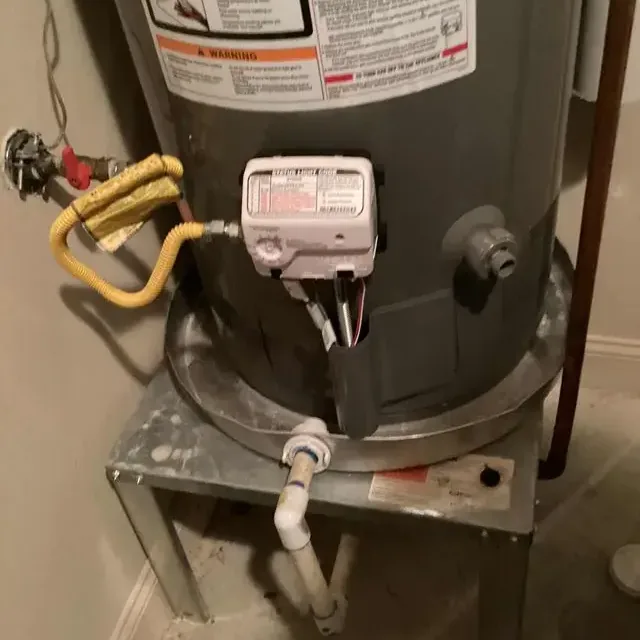
A water heater tank holds enough water to soak a utility room, a closet or a garage floor. When a seam or a fitting fails, the water heads for the nearest wall, drain and finished floor.
Key takeaways
- Shut off the cold water supply to the tank first, then the power or gas to the heater.
- A leaking tank is replaced, not patched, so the cleanup and the replacement need to be planned together.
- The Village of Milford Building Department takes plumbing permit applications, and its form says plumbing work must not start until the application is filed.
- The village fee chart counts water heaters, washing machines, dishwashers and floor drains among water connected fixtures.
- Milford Township is a separate government, so the first check is whether the address is in the village.
How a water heater tank fails
Most tank leaks start small. A weeping relief valve, a rusty seam or a loose supply fitting drips for a while, and then a seam opens.
Age matters. An older tank is more likely to fail from the inside than a newer one, and the failure often comes with little warning.
- Rust stains at the base or along the sides of the tank.
- A relief valve that drips or weeps.
- Puddles or damp spots on the floor nearby.
- Popping or rumbling sounds while the tank heats.
- A tank that is well past its expected age.
Catching the next failure early
A tank that is checked now and then rarely surprises its owner. A few minutes with a flashlight tells more than most people expect.
Local housing runs from about 477 units that date to 1939 or before up through newer construction, with a median build year of 1973, so tanks of many ages are in use.
- Look at the base of the tank for rust, damp spots or mineral crust.
- Check the relief valve and the pipes above the tank for drips.
- Know where the cold water supply valve and the power or gas control are.
- Plan the replacement of an aging tank before it fails, not after.
- Keep stored items off the floor around the tank.
The first steps at the tank
Water on the floor and a hot tank call for a safe order of steps.
- Close the cold water supply valve on top of the tank.
- Turn off the electric breaker, or set the gas control to off, before touching the heater.
- Stay out of standing water near the heater while the power is on.
- Move stored items off the wet floor.
- Photograph the tank, the floor and the walls.
- Arrange water extraction so the floor and walls are not left to soak.
What is in the water and what to watch for
Tank water starts out clean, but it is not harmless. It can be hot enough to scald, and it carries sediment and rust flakes from the bottom of the tank.
A tank that fails also soaks whatever sits beside it. Cardboard boxes, laundry baskets and paint cans go first, and the water picks up dirt as it crosses the floor.
- Keep skin and feet clear of water near the tank until it cools.
- Do not touch outlets, cords or the heater while water is standing around them.
- Carry stored items out of the water path before they soak through.
- Clean water left on the floor becomes a different problem after a long wait, so extraction should not be put off.
Where the tank sits changes the plan
The same tank failure plays out differently depending on where the tank stands.
In a closet
Water runs into the wall framing and under the flooring of the rooms beside the closet. The drywall behind the tank is opened where readings show moisture.
In a utility room
Water spreads across the floor toward the drain and the doorway. Vinyl, tile and laminate are lifted when water reaches the subfloor, so the subfloor can dry.
In a garage
Water spreads across the garage floor and soaks stored boxes, tools and any wall finish it reaches. Hard surfaces dry in place, and soaked boxes are sorted and discarded.
What the cleanup removes and dries
Clean water from a tank is the easiest kind to handle, as long as the cleanup starts before it soaks deep. The work follows a set order.
- Standing water is extracted first.
- Carpet and pad near the tank are usually removed.
- Wet insulation is pulled out, because it holds water against the framing.
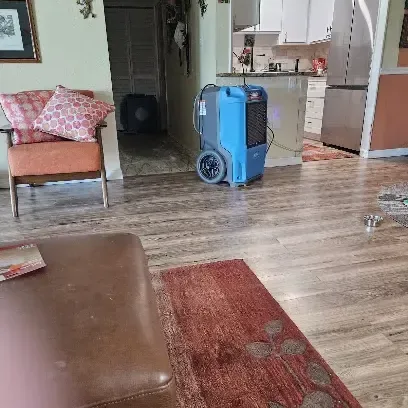
- Moisture readings map the wet area, and air movers and dehumidifiers dry the framing and subfloor.
- Materials are replaced once the readings reach the dry goal.
Plumbing permits in the Village of Milford
The Village of Milford Building Department takes plumbing permit applications. The village form says plumbing work must not start until the application is filed.
The village plumbing permit fee chart counts water heaters, washing machines, dishwashers and floor drains among water connected fixtures.
The chart does not say which replacement jobs need a permit, so a question about a specific tank goes to the Building Department.
- Ask the plumber who files the permit application.
- Ask whether the application is filed before the old tank comes out.
- Keep the permit paperwork with the repair records.
Village address or township address
The village sits inside Milford Township, which is a separate government, so township offices and township rules are not the village's.
The ZIP codes 48381 and 48380 also cover parts of the township, so a Milford address is not always inside the village. The first question for any permit or inspection is which government the property belongs to.
Appliances, replacement and records
The fee chart lists washing machines and dishwashers beside water heaters, and they fail in a similar way: a hose or a fitting lets go while nobody is home.
The water is clean at the start, and the cleanup steps match the tank leak. Read more about appliance leak cleanup when the source is a washer, a dishwasher or an ice maker.
After the leak: replacement and records
Once the floor and walls read dry, the tank is replaced and the permit step is completed as the Building Department asks. A water heater leak job ends with the tank, the repairs and the records all in order.
- Photos of the tank, the leak path and the damage.
- Moisture readings and the date drying finished.
- Receipts for the tank, the plumber and the cleanup.
- Permit paperwork and any inspection notes.
Questions
Does a leaking water heater have to be replaced?
A tank that leaks from the tank itself is replaced. A leak at a fitting or a valve may be repaired by a plumber.
Does the village require a permit to replace a water heater?
The village takes plumbing permit applications, and its fee chart lists water heaters among water connected fixtures. Whether a given replacement needs a permit is a question for the Building Department.
How is the floor dried after a tank leak?
Water is extracted first, then air movers and dehumidifiers run until the readings reach the dry goal. Soaked carpet pad and drywall are removed rather than dried.
Is water from a leaking tank dangerous?
It can be hot, and it often carries rust flakes and sediment. Skin stays clear of it, and power to the heater is shut off before anyone steps into the water.
What if the heater sits in a closet?
Water reaches the wall framing, so the walls are opened where the readings show moisture.
Is a township address under the village rules?
No. The township is a separate government, and its offices and rules are not the village's.