Ice Dam Water Damage in Milford
When snow melts on a warm roof and refreezes at the edge, the ice can push water under shingles and into the house. Crews find the wet ceiling, wall and insulation, then dry each layer before staining and swelling spread.
(888) 612-9219Report the winter ceiling leak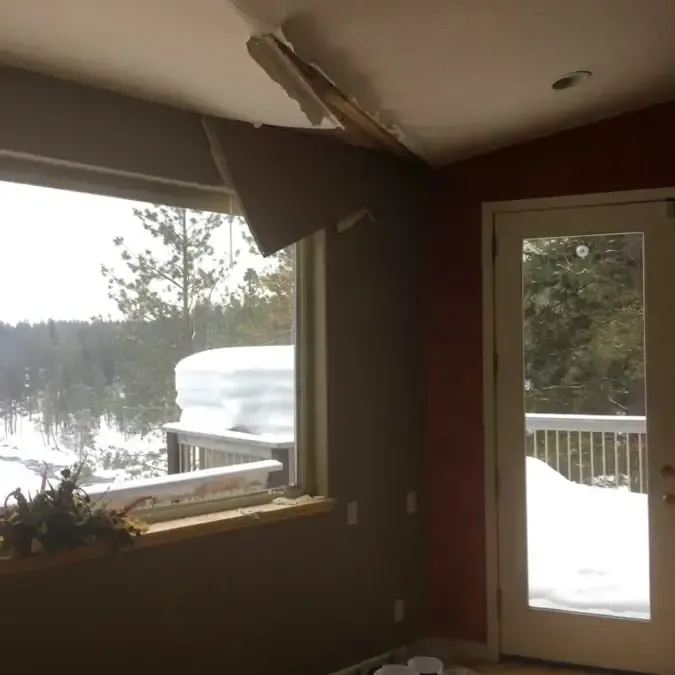
First steps for ice dam water damage in Milford
Catch the drip
Place a bucket and move belongings away from the stain.
Protect the floor
Lay plastic or towels below the leak.
Photograph the ceiling
Record stains and sagging before anything is cut.
Leave roof work to pros
Do not climb onto an icy roof to chip at the ice.
How a ice dam water damage job is handled
Readings before equipment
The tech who does the walkthrough checks walls, floors and the basement slab with pinless meters and thermal imaging before a single fan is placed.
Dried to IICRC S500
The drying team follows IICRC S500, the industry drying standard, so framing and subfloor get structural drying, not a surface wipe.
A file the adjuster can follow
Moisture maps, daily logs and timestamped photos go into one claim file from the first visit to the last reading.
Built for Michigan winters
Frozen pipes, ice dams, snowmelt seepage and sump pumps that quit in a storm are routine work across Livingston County.
What does ice dam water damage cost in Milford, MI?
Ice dam losses range from one stained ceiling to wet walls and flooring after a long leak. Cost follows how much drywall and insulation must be removed and how many days of drying the structure needs, plus how much hidden moisture the meters find.
One ceiling area
$900 to $2,500
- Ceiling opened and dried
- Eave insulation removed
- Short equipment period
Several rooms and walls
$2,500 to $6,500
- Wall cavities opened
- Attic insulation removed
- Several days of drying
Long winter leak
$6,500 to $15,000+
- Ceilings, walls and flooring
- Large insulation removal
- Full structural drying
Ranges are typical, not a quote: water category, wet square footage, material class and how fast drying started move the number most. Run the water damage cost calculator for a closer planning range.
The ice dam water damage process, start to dry
Four stops, run in this order, with a reading logged at each one.
- 1
Map the wet area
A thermal camera and meters show the stain's real extent.
- 2
Remove saturated layers
Wet insulation and damaged drywall are cut out and bagged.
- 3
Dry the structure
Air movers and dehumidifiers dry framing and the remaining drywall.
- 4
Confirm and record
Readings and photos are logged until dry.
An ice dam is a ridge of ice at the roof edge that traps meltwater behind it. Milford winters are cold and sometimes severe, so repeated freezing and thawing can set the conditions, and the water that gets in shows up on ceilings and in exterior walls. The leak often starts small, then grows each time another round of snow and sun repeats the cycle.
How the water gets in
- Meltwater backing up beneath shingles
- Insulation that soaks and stops insulating
- Ceiling drywall that stains, sags or cracks
- Exterior wall cavities that stay damp
- Soaked trim and paint that blister or peel
- Ice that melts and drips behind gutters and trim
What drying involves
Wet attic insulation is removed because it holds water against the ceiling and cannot be dried reliably. Ceilings and walls are opened as needed, then dried with air movers and dehumidifiers while readings track the progress.
Mapping comes first. A thermal camera shows the shape of the wet area on the ceiling, which often follows the roof edge, and moisture meters confirm how far into the wall the water reaches. Wall cavities beside the stain are checked too, because water runs down the framing and can wet the top plate and the wall below long after the ceiling stops dripping.
Related winter damage
Ice damage often overlaps with roof leak water damage and, when pipes freeze, frozen pipe water damage. Roof repairs and ice removal are separate trades from drying. Gutters and downspouts packed with ice can add to the problem, so a roofer or gutter contractor usually checks the roof edge once the interior is under control.
Ice Dam Water Damage across the surrounding area
Winter ice dam calls come from across the village, including Downtown Milford, the Southside district, the Main Street area, the Huron Street area, the Oakland Street area and the Commerce Street area, in ZIP codes 48381 and 48380.
The same service nearby: ice dam water damage in Howell, South Lyon, Brighton. Every water service for this town · every town covered
Related water damage services nearby
Ice Dam Water Damage questions in Milford, MI
What causes an ice dam?
Heat escaping into the attic melts snow on the roof, and the meltwater refreezes at the cold edge, forming a ridge that holds more water back. The ridge often shows up as icicles and a wet stripe on the ceiling below.
Does insurance cover ice dam damage?
Interior water damage from an ice dam is often covered as sudden water, but roof repair terms vary. Check the policy and report the leak promptly.
Should I remove the ice myself?
Chipping at ice can damage shingles and is dangerous on a slick roof. Leave removal to roofing professionals and focus on protecting the interior.
Will wet insulation dry out?
Usually not. Compressed, soaked insulation holds water against the ceiling, so it is removed and replaced after the structure dries.
How can they be prevented?
Better attic sealing, ventilation and insulation reduce the heat that melts the snow. A roofer or insulation contractor can advise.
How long will drying take?
Ceilings and wall cavities often need several days of equipment, depending on how much water soaked in and how dense the materials are. Daily readings decide when the equipment leaves.
Winter leaks hide behind the ceiling
A stain on the drywall is often the tip of a wet cavity. Call, and the crew will map it, dry it and keep the records the insurer expects.