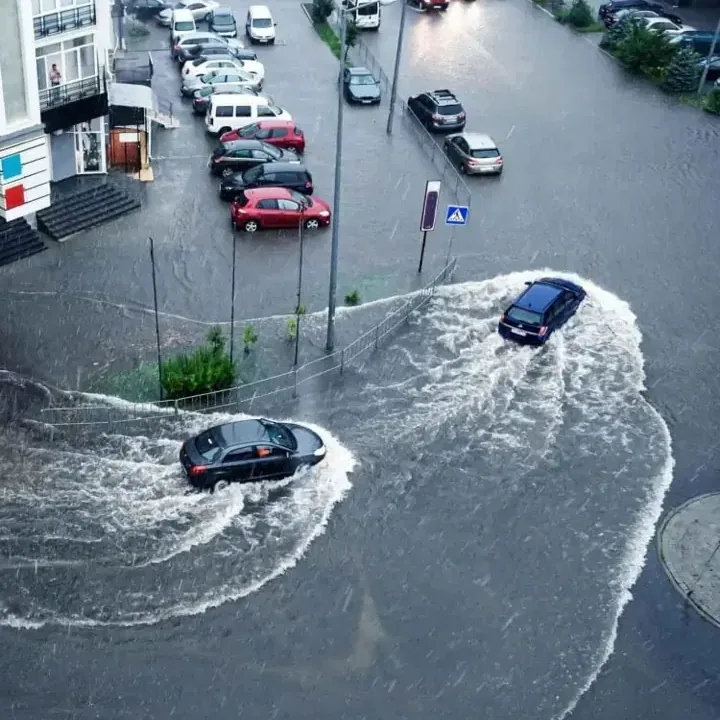
In early April 2026, heavy rain flooded a road and sent lake water into backyards across the area. Water that comes in from outside needs a different cleanup than a burst pipe, and the first choices inside the house set the course.
Key takeaways
- Flood water from outside is handled as contaminated, which is a different job from a clean water pipe leak.
- Stay out of standing water while the power is on, and turn power off only from a dry spot.
- Soaked carpet, pad, insulation and low drywall are usually removed rather than dried.
- Photograph water marks and damaged items before anything is moved, and keep a written list.
- Drying ends on moisture readings in the framing and floors, not on how the room looks.
What happened in April 2026
On Saturday, April 4, 2026, heavy rain flooded North Holly Road south of Elliott Road, and the road was still closed on Monday. Emergency crews rescued drivers and removed disabled vehicles.
The National Weather Service reported that multiple locations north of Holly Road and Grange Hall Road were flooded, with local lakes spilling into backyards.
Repeated heavy rain through the month also pushed flows at the village wastewater system far above normal capacity, and a primary pump failed. The village declared a local state of emergency on April 21, 2026, and the governor extended the state declaration later that month.
Those reports are about roads, backyards and a treatment plant. They do not say sewage entered homes.
CBS Detroit reported that the flooding affected about 230 homes in the Hawaiian Gardens modular home community, as well as homeowners in other parts of the village.
Why water lingers on low ground
In 2019 the village utilities director said Holly is built on a swamp with many low lying areas. Low ground holds water longer than a slope does.
That is why a dry afternoon does not mean a dry house. Water that has soaked into floors and wall bottoms keeps working after the yard looks clear.
Why flood water is handled differently from a pipe leak
A supply pipe leak puts clean water on a floor. Flood water comes in from yards, roads and ditches, and it carries soil, bacteria and whatever else it crossed.
The restoration trade treats that outside water as Category 3, the most contaminated class. The same rule applies to water that came from a lake, a ditch or a swollen creek.
That changes what can stay in the house. Porous materials soaked in contaminated water are removed, because drying alone cannot make them safe.
- Category 1: clean water from a supply pipe or an appliance.
- Category 2: gray water, such as a washer or dishwasher overflow.
- Category 3: flood water, sewage and any water that came from outside.
The first steps inside a flooded home
Safety comes before cleanup. Electricity and standing water do not mix, and flood water can hide hazards under the surface.
The steps below apply whether the water is a few inches deep or only soaked the carpet. Clean up that waits for the yard to drain tends to be larger.
- Stay out of standing water while the power is on. If the breaker panel is in a dry spot, turn the power off there.
- Wear waterproof boots and gloves for any contact with flood water.
- Keep children and pets out of the wet rooms.
- Throw out food and drinks that touched the water.
- Arrange water extraction as soon as the rooms are safe to enter.
- Skip the household vacuum and the box fan, which only push contaminated water and air around.
What is removed and what is dried
The crew sorts materials by how they hold water. Porous materials soaked in flood water go out, while solid materials stay and are cleaned and dried.
Materials that are removed
These hold contamination and dry too slowly to be saved.
- Carpet and pad.
- Insulation inside walls the water reached.
- Drywall and baseboard below the water mark.
- Mattresses, upholstered furniture and particleboard cabinets.
Materials that are cleaned and dried
Framing, subfloors, concrete and solid wood are scrubbed, sanitized and dried with air movers and dehumidifiers.
Moisture readings inside the framing show when each area has reached the dry goal. Full structural drying continues until they do.
Belongings, appliances and papers
Contents follow the same sorting rule as the building. What cannot be cleaned is discarded, and what can be cleaned is washed and sanitized.
- Glass, metal and sealed plastic can usually be washed and sanitized.
- Soft goods soaked by flood water, such as stuffed toys and bedding, are usually discarded.
- Appliances and electronics that sat in water need a technician's check before they are used again.
- Papers and photos are separated and dried flat as soon as possible.
Modular and mobile homes after flooding
About 309 housing units in the village are mobile homes, and a modular home community was among the places reported flooded in April.
In a compact floor plan, water can reach most rooms quickly, and low wall cavities and floors hold it. Drying plans follow the building type, so the crew checks how the floor and lower walls are built before deciding what to open.
- Press the floor for soft or bouncing spots after water has stood on it.
- Look for water marks inside lower cabinets and behind trim.
- Tell the property owner or park management right away, and keep the message.
How the drying is checked
Drying is a measured job. The crew records readings at the start and again at each visit, so the numbers show whether the work is moving the right way.
Moisture readings
Each wet material has a target reading, set by measuring a dry sample of the same material in the same house.
An area is finished when its readings match the target, even if the surface felt dry days earlier.
Equipment
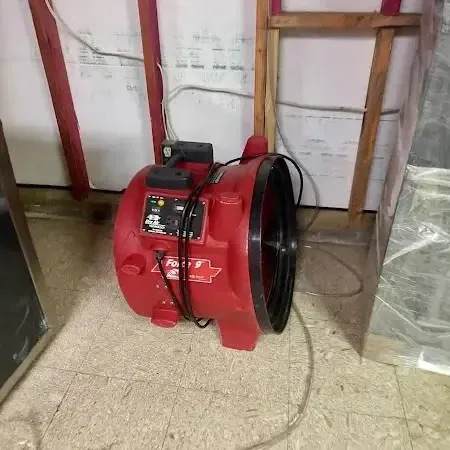
Air movers push dry air across wet surfaces, and dehumidifiers pull the moisture out of the room. Equipment is moved as areas finish, and it stays until the last area is done.
Documenting the loss
A good record starts on the day of the flood. Dates, photos and lists matter more than memory.
Declarations by the village and the state mark the size of the event. The record for a single house still comes from that house.
- Photograph water marks on walls, appliances and furniture.
- Photograph and list every discarded item before it leaves the house.
- Keep receipts for emergency work and temporary housing.
- Write down when the water came in and when it went down.
Questions
Is flood water the same as water from a broken pipe?
No. Pipe water starts clean, while flood water picks up soil and bacteria outside. That is why flood cleanup removes soaked porous materials.
Can flooded carpet be saved?
Carpet and pad soaked by flood water are usually removed. They hold contamination that drying does not take out.
When should drying start?
After the water is out. Wet framing and subfloors keep absorbing and weakening, and delay widens the damage.
Does a local emergency declaration change the cleanup steps?
A declaration is a public step about the size of an event. Inside a house the work is the same: extract, remove soaked materials, clean and dry. The storm flood cleanup steps stay the same.
What if the water came from a lake in the backyard?
Lake and ditch water is outside water and is treated as contaminated. The same removal and cleaning steps apply.
What is the first thing to do when flood water is in the house?
Stay safe: keep out of the water while power is on, turn the power off only from a dry spot and wear boots and gloves. Then arrange extraction and start photographing.