Appliance Leak Water Damage in Holly, MI
A dishwasher, washer or supply hose that leaks soaks cabinets, flooring and sometimes the ceiling or unit below, so the crew traces the source, extracts the water and dries every hidden spot the water reached.
(888) 612-9219Call about a leaking appliance or hose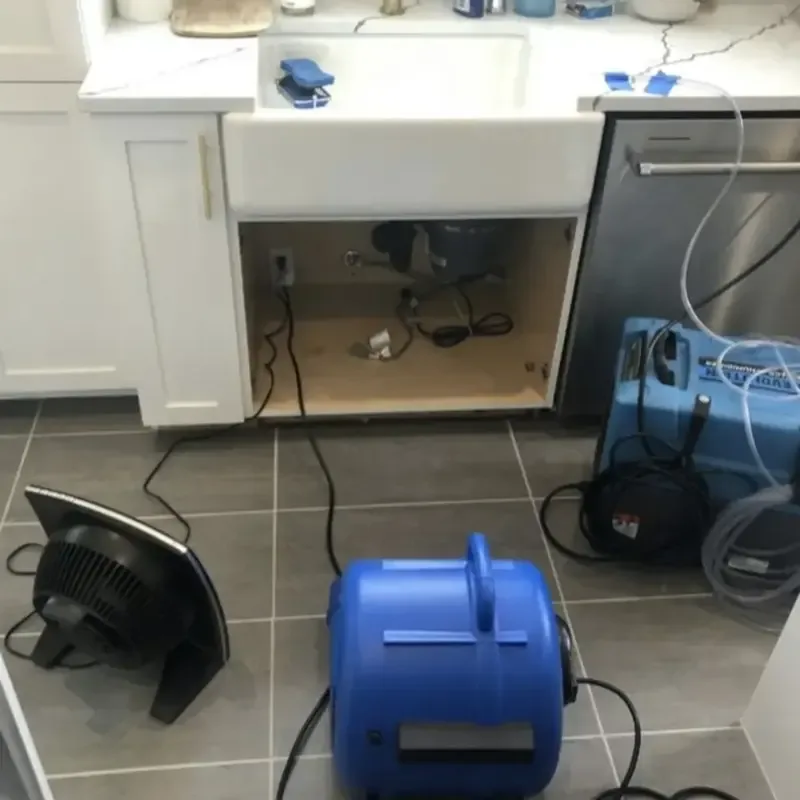
First steps for appliance and supply hose leaks in Holly
Shut the valve
Close the appliance valve or the main.
Pull the unit out
Slide it away only if the floor is safe.
Mop and photograph
Soak up standing water and photograph the source.
Warn the household below
Tell neighbors under and beside the leak to check ceilings.
How a appliance and supply hose leaks job is handled
Readings before equipment
The tech who does the walkthrough checks walls, floors and the basement slab with pinless meters and thermal imaging before a single fan is placed.
Dried to IICRC S500
The drying team follows IICRC S500, the industry drying standard, so framing and subfloor get structural drying, not a surface wipe.
A file the adjuster can follow
Moisture maps, daily logs and timestamped photos go into one claim file from the first visit to the last reading.
Built for Michigan winters
Frozen pipes, ice dams, snowmelt seepage and sump pumps that quit in a storm are routine work across Livingston County.
What does appliance and supply hose leaks cost in Holly, MI?
A leak caught quickly often costs $600 to $1,800, one under cabinets and flooring runs $1,800 to $5,000, and an upstairs laundry leak that reaches the ceiling below can reach $5,000 to $10,000 or more.
Caught quickly
$600 to $1,800
- Surface water extracted
- Air movers and a dehumidifier
- Short drying stay
Under cabinets and floors
$1,800 to $5,000
- Toe kicks removed
- Hardwood drying mats
- Three to five days drying
Upstairs laundry
$5,000 to $10,000+
- Two levels affected
- Ceiling opened below
- Full structural drying
Ranges are typical, not a quote: water category, wet square footage, material class and how fast drying started move the number most. Run the water damage cost calculator for a closer planning range.
The appliance and supply hose leaks process, start to dry
Four stops, run in this order, with a reading logged at each one.
- 1
Trace the source
A meter and thermal camera follow the water into hidden areas.
- 2
Extract and open
Standing water is removed, and toe kicks and wet pad come out.
- 3
Dry the hidden spots
Mats and air movers dry under cabinets and the subfloor.
- 4
Check the units around
Neighboring walls and ceilings are read.
Holly has 755 renter-occupied homes and 229 units in buildings of 50 or more units, which means a leak in one apartment can easily reach a neighbor. A failed hose or a clogged dishwasher drain rarely stays in one room.
Common sources of appliance leaks
- Washing machine supply hoses that bulge, crack or pop off the valve.
- Dishwasher door seals, drain hoses and inlet fittings.
- Refrigerator ice maker tubing and drip pans.
- Sink supply connections under the counter.
- Condensate drains from air conditioners and dehumidifiers.
Drying behind and beneath
Water from an appliance seeps under toe kicks and into the subfloor, so the crew removes the kick plates, lifts wet pad and places hardwood drying mats where boards are cupping. Moisture mapping shows whether the water traveled into the ceiling below.
In a multi-unit building each affected unit is documented separately, which helps the building and each household sort out its own claim. The water extraction page covers the pump-out step, and the main appliance leak page lists the full process.
Upstairs laundry and shared walls
Laundry rooms above living space are the costliest source, because water drops into the ceiling below and runs along joists before anyone sees it. A stain on the ceiling below is often the first sign, and by then the subfloor and insulation are already wet.
Appliance and Supply Hose Leaks across the surrounding area
Appliance leaks come in from apartments and houses across the village, including Downtown Holly, the Lake District, the North End, the Martha Street and Sherman Street areas and every address in ZIP code 48442.
The same service nearby: appliance and supply hose leaks in Howell, Fenton, Milford. Every water service for this town · every town covered
Related water damage services nearby
Appliance and Supply Hose Leaks questions in Holly, MI
Which appliances leak most often?
Washing machine hoses, dishwasher seals and drain hoses, refrigerator ice maker tubing and sink supply connections cause most household leaks.
Can a leak reach the neighbors?
Yes. With 229 units in buildings of 50 or more units and 755 renter-occupied homes here, shared floors and walls carry water between households.
Is appliance leak water dirty?
Supply hose water is clean at first. Dishwasher and washer drain water is gray, and the crew treats it that way when it sat in cabinets or flooring.
Can hardwood floors be saved?
Often, if drying mats start early. Boards that have cupped can flatten as they dry, while buckled flooring may need replacing.
What does a dehumidifier do after an appliance leak?
It pulls moisture out of the air so cabinets, subfloors and wall cavities release the water they absorbed instead of staying damp.
Who comes first, a plumber or the water crew?
The leak is stopped first, then the crew dries. If the appliance needs repair, a technician can work once the area is safe.
Dry the cabinets, floors and ceiling below
A crew traces the source, extracts the water and dries every hidden spot at a Holly home or apartment, then checks the neighboring walls.