Ice Dam Water Damage in Fenton
When melting snow refreezes at the eave and backs water under the shingles, it soaks insulation and drips through ceilings and exterior walls. The crew opens the wet layers, dries them with heat and records the damage for the claim.
(888) 612-9219Dry the ceiling under the ice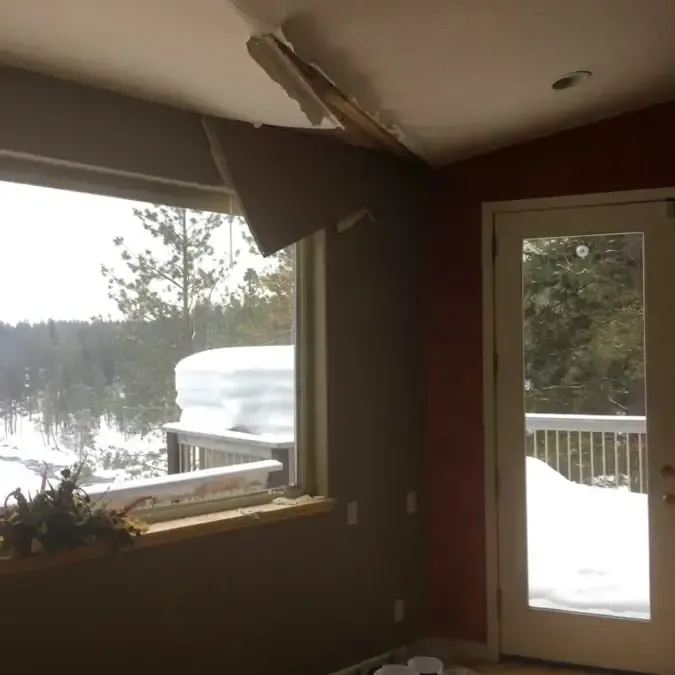
First steps for ice dam water damage in Fenton
Catch the drip
Set buckets under drips and move belongings away from the wet ceiling.
Protect the floor
Lay plastic or towels under the wet area to keep the damage from spreading.
Stay off the roof
Chipping ice risks a fall and damaged shingles, so leave it to a roofer.
Photograph it
Photograph the ceilings, the walls and the attic before anything is cleaned up.
How a ice dam water damage job is handled
Readings before equipment
The tech who does the walkthrough checks walls, floors and the basement slab with pinless meters and thermal imaging before a single fan is placed.
Dried to IICRC S500
The drying team follows IICRC S500, the industry drying standard, so framing and subfloor get structural drying, not a surface wipe.
A file the adjuster can follow
Moisture maps, daily logs and timestamped photos go into one claim file from the first visit to the last reading.
Built for Michigan winters
Frozen pipes, ice dams, snowmelt seepage and sump pumps that quit in a storm are routine work across Livingston County.
What does ice dam water damage cost in Fenton, MI?
One damaged ceiling area runs $900 to $2,500, several rooms and wall cavities run $2,500 to $6,500, and a long-running winter leak that reached ceilings, walls and flooring costs $6,500 to $15,000 or more.
One ceiling area
$900 to $2,500
- Ceiling opened and dried
- Insulation pulled at the eave
- A few days of equipment
Rooms and walls
$2,500 to $6,500
- Wall cavities opened
- Attic insulation removed
- Four to six days of drying
Long winter leak
$6,500 to $15,000+
- Ceilings, walls and floors
- Large insulation removal
- Full structural drying
Ranges are typical, not a quote: water category, wet square footage, material class and how fast drying started move the number most. Run the water damage cost calculator for a closer planning range.
The ice dam water damage process, start to dry
Four stops, run in this order, with a reading logged at each one.
- 1
Survey the leak
Meters and a thermal camera trace moisture from the attic down.
- 2
Remove wet insulation
Soaked insulation is bagged and damp drywall is opened where readings stay high.
- 3
Dry the layers
Heat, air movers and dehumidifiers dry the attic edge, ceiling and wall cavities.
- 4
Verify
Readings and photos go to the insurer once layers read dry.
An ice dam forms when snow on a warm roof melts, runs to the cold eave and freezes into a ridge that traps the water behind it. That trapped water can seep under shingles and into the attic, and from there into insulation, ceilings and exterior walls. It often goes unnoticed until a ceiling stain appears.
What a winter roof leak leaves behind
- Wet attic insulation that holds water against the framing
- Ceiling stains, sags or bubbles beneath the roof edge
- Wet exterior wall cavities where meltwater ran down inside the wall
- Frost or damp patches in the attic on cold mornings
- Peeling paint along the top of an outside wall
- Stained or dripping light fixtures near the roof edge
How the dry-out works
The crew starts in the attic, pulling insulation that stays wet, then opens the ceiling or wall where moisture readings stay high. Heat and dehumidifiers dry the cavity, and thermal imaging shows when the last damp area is gone. Clear, cold nights after a snowfall make the cycle worse, because melt and refreeze keep repeating.
A roofer or insulation contractor handles the cause, while the cleanup deals with water that already came in. The roof leak page covers leaks that start at the roof surface itself.
Winter snow and Fenton roofs
The National Weather Service lists the winter of 2013 to 2014 as the snowiest on record at Detroit and Flint. That is a regional record rather than a measurement in the city, but it shows how much snow a Michigan winter can stack on a roof of any type.
Ice Dam Water Damage across the surrounding area
Ice dam calls reach houses and condominiums across the city, including older streets near downtown, the Appletree subdivision and the neighborhoods around Mill Pond Park and Silver Lake Road, in ZIP code 48430.
The same service nearby: ice dam water damage in Howell, Holly, Milford. Every water service for this town · every town covered
Related water damage services nearby
Ice Dam Water Damage questions in Fenton, MI
Why does an ice dam leak into the house?
The ridge of ice holds meltwater behind it, and the water finds gaps under the shingles. From there it runs into the attic and down through the ceiling or the wall.
Can wet insulation be saved?
Usually not. Soaked insulation compresses, holds water against the framing and loses its value, so it is removed and replaced.
Do the walls need to be opened?
When meltwater ran down inside an exterior wall, the cavity often stays wet, and readings decide how much drywall comes out.
Does the cleanup fix the ice dam?
No. The cleanup dries the damage, and a roofer or insulation contractor addresses the heat loss and ventilation that made the ice dam.
Will insurance cover ice dam damage?
Many policies cover sudden interior water damage from an ice dam, though wording varies. The adjuster will want dated photos and the moisture readings.
What if the leak is from the roof itself?
A leak from worn or damaged shingles in warm weather is a different cause, and the roof leak page covers that cleanup.
Dry out what the meltwater reached
The crew handles the wet insulation, the ceiling and the wall cavities, and saves the readings and photos the insurer asks for.