Ice Dam Water Damage in Holly, MI
When meltwater backs up behind ice at the roof edge, it can seep into the attic and down exterior walls, so the crew opens the stained ceiling, removes soaked insulation, checks the wall cavities and dries the wet framing.
(888) 612-9219Call about the ceiling stain now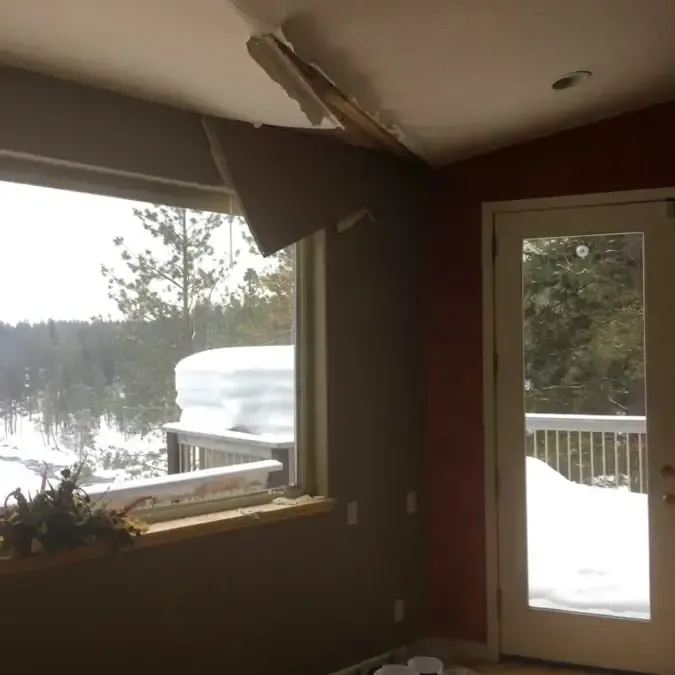
First steps for ice dam water damage in Holly
Contain the drip
Place a bucket under the leak and drain a bulging ceiling only if it is safe.
Stay off the roof
Chipping ice from a ladder or roof is dangerous and can damage shingles.
Protect the room
Move furniture and rugs away from the stain and cover what cannot move.
Photograph the stains
Take dated photos of the ceiling and walls, because the area often grows.
How a ice dam water damage job is handled
Readings before equipment
The tech who does the walkthrough checks walls, floors and the basement slab with pinless meters and thermal imaging before a single fan is placed.
Dried to IICRC S500
The drying team follows IICRC S500, the industry drying standard, so framing and subfloor get structural drying, not a surface wipe.
A file the adjuster can follow
Moisture maps, daily logs and timestamped photos go into one claim file from the first visit to the last reading.
Built for Michigan winters
Frozen pipes, ice dams, snowmelt seepage and sump pumps that quit in a storm are routine work across Livingston County.
What does ice dam water damage cost in Holly, MI?
An ice dam leak in one ceiling area often costs $900 to $2,500, several rooms and walls run $2,500 to $6,500, and a long-running winter leak can reach $6,500 to $15,000 or more.
One ceiling area
$900 to $2,500
- Ceiling opened and dried
- Insulation pulled at the eave
- Three to four days equipment
Several rooms and walls
$2,500 to $6,500
- Exterior walls opened
- Attic insulation removed
- Four to six days drying
Long-running leak
$6,500 to $15,000+
- Ceilings, walls and floors
- Large insulation removal
- Full structural drying
Ranges are typical, not a quote: water category, wet square footage, material class and how fast drying started move the number most. Run the water damage cost calculator for a closer planning range.
The ice dam water damage process, start to dry
Four stops, run in this order, with a reading logged at each one.
- 1
Find the path
Meters and a thermal camera trace water from the roof edge into the attic and walls.
- 2
Open and remove
Sagging drywall and soaked insulation are cut out.
- 3
Dry the structure
Air movers and dehumidifiers run above and below the ceiling.
- 4
Verify the readings
Final readings must match an unaffected wall before equipment leaves.
Cold Michigan winters create the conditions for ice dams, though no dated ice dam event is confirmed for Holly and the way local roofs are built is not documented, so the discussion below stays in general terms. What matters is what happens next: the water finds a way into the structure.
How an ice dam leaks
- Heat from the house melts snow on the roof, and the meltwater runs down toward the cold eave.
- At the eave it refreezes into a ridge of ice that blocks further drainage.
- Trapped water backs up under shingles and soaks the roof deck and attic insulation.
- It then stains the ceiling below or runs down the inside of the exterior wall.
The cleanup
Wet attic insulation is heavy and holds water against the ceiling, so the crew pulls the soaked portions and bags them. Ceiling drywall that has sagged is opened, and exterior wall cavities are checked with a moisture meter before they are dried. Cavities near the eave come first, because meltwater often runs down inside them.
Equipment placed in the attic and the room below then runs until readings match dry framing. Once the structure is dry, a roofer can address ventilation and the eaves, and the roof leak page covers leaks that come from damaged roofing instead of ice.
Why timing matters in winter
A slow ice dam leak can run for weeks behind a finished ceiling, so a stain that appears after a thaw may be the tip of a larger wet area. The main ice dam page describes how long-running winter leaks affect the scope of the repair.
Ice Dam Water Damage across the surrounding area
Roof edge leaks are reported across the village, including Downtown Holly, the Church Street, Sherman Street and Tenny Street areas, the Lake District, the North End and the rest of ZIP code 48442.
The same service nearby: ice dam water damage in Howell, Fenton, Milford. Every water service for this town · every town covered
Related water damage services nearby
Ice Dam Water Damage questions in Holly, MI
What is an ice dam?
A ridge of ice at the roof edge that blocks meltwater from draining. The water backs up beneath the shingles and can enter the attic, the ceiling and the exterior walls.
Does the water in an ice dam leak stay clean?
Usually it begins as clean meltwater. If it soaks insulation and sits there for weeks, it can turn gray, and the crew treats it that way when material stays wet.
Can wet attic insulation be dried in place?
Sometimes, if it is not packed down. Heavily soaked or compressed insulation is usually removed, because it holds water against the ceiling and slows drying.
Is there a recorded ice dam event in Holly?
No dated ice dam event is confirmed for Holly. Winters here are cold, and the problem can occur in any heavy snow followed by thaw, so the answer stays general.
Should ice be chopped off the roof?
No. Chopping from a ladder or roof is dangerous and can damage shingles. A roofer or a steamer uses safe methods, and the water crew handles the interior damage.
How long does the drying take?
Typically four to six days for a ceiling, attic and wall, depending on how much insulation was soaked. The crew logs readings each visit until the framing matches a dry reference.
Dry the ceiling and attic before spring
A crew can come to a Holly address with meters, air movers and dehumidifiers, open the wet ceiling and bring the insulation and framing back to dry.